Tired of Guessing the Perfect Room Temperature? Here’s How Smart Climate Control Learns Your Comfort Rhythm
Living in a home that just knows when you’re cold before you even shiver—that’s not magic, it’s smart temperature control. You know those moments: waking up chilly at 3 a.m., or walking into a stuffy living room after work? I used to fumble with thermostats like everyone else, but once I started treating my home like it could learn me, everything changed. It’s not about high-tech tricks—it’s about creating a space that quietly supports your daily rhythm, your family’s needs, and even your mood. Now, instead of adjusting the temperature, I let it adjust to me. And honestly? It’s one of the most peaceful upgrades I’ve ever made to my home life.
The Daily Struggle: When Your Thermostat Doesn’t Understand You
Let’s be real—how many times have you wrapped yourself in a blanket at noon in July because the air conditioning decided to go into overdrive? Or woken up with stiff shoulders because the bedroom turned into an icebox overnight? These aren’t just little annoyances. They add up. They disrupt your sleep, throw off your morning routine, and leave you feeling like your own home is working against you. I remember one winter morning, my youngest woke up with chattering teeth, and I felt so guilty. I thought, I’m doing everything else for this family—why can’t I get the temperature right? That moment hit me hard. It wasn’t just about comfort. It was about care. And the truth is, traditional thermostats don’t care. They don’t know when the sun hits the kitchen and warms up the whole house. They don’t notice that your teenager likes it cooler at night or that your partner always kicks the blankets off. They just run on a schedule—or worse, on guesswork.
And it’s not just about how you feel. That constant back-and-forth with the thermostat wastes energy. You crank up the heat because it’s cold now, but an hour later, the house is sweltering and you’re cracking a window. That’s not just inefficient—it’s expensive. I didn’t realize how much we were overspending until I looked at our heating bills from last year. The numbers shocked me. But what really wore me down was the mental load. Every time I walked into a room, I was asking myself: Is it too hot? Too cold? Should I change it? It became another decision in a day already full of them. As mothers, as caregivers, as the ones who hold the household together, we don’t need more decisions. We need things that just work. That’s when I realized: what if my home could understand me the way I understand my family? What if it could anticipate, adapt, and support—without me having to lift a finger?
First Steps: Choosing the Right Smart Thermostat Without Overthinking
When I first looked into smart thermostats, I’ll admit—I was intimidated. The websites were full of terms like “geofencing,” “adaptive recovery,” and “HVAC compatibility.” I felt like I needed an engineering degree just to pick one. But here’s what I learned: you don’t have to be a tech expert to benefit from smart home tech. In fact, the best systems are designed for people like us—busy, practical, and just looking for a little more ease in our days. The key is to start simple. Don’t try to automate your whole house on day one. Pick one pain point. For me, it was the living room. It was either a sauna in the evening or freezing when the kids came home from school. So I focused on fixing that first.
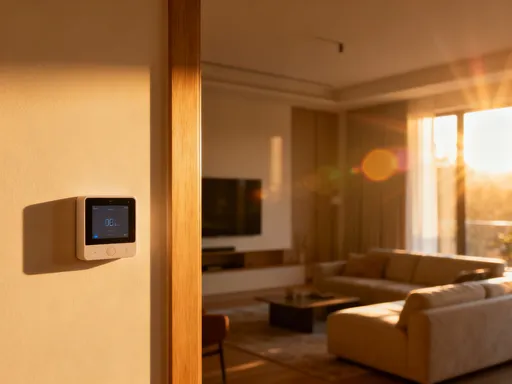
The first thing I did was check what kind of heating system we have. Most smart thermostats work with standard systems, but it’s worth a quick call to your HVAC provider or a look at your current thermostat to make sure. Then, I looked for something with a clean, easy-to-read screen and a mobile app. Why the app? Because I’m not always near the thermostat. Sometimes I’m in the car and I think, I should warm up the house before we get home. With an app, I can do that in seconds. I also read reviews—not just the five-star ones, but the honest, real-life feedback from other moms and homeowners. One woman wrote, “It took me ten minutes to install, and now my toddler sleeps better because her room stays just right.” That’s the kind of insight you can’t get from a product spec sheet.
I avoided models with too many bells and whistles. You don’t need a thermostat that can play music or show the weather—unless that truly matters to you. For most of us, the basics are more than enough: automatic scheduling, remote control, and the ability to learn. I chose one that promised a simple setup and a helpful app. And you know what? It was easier than changing a light fixture. The instructions were clear, the app walked me through each step, and within an hour, it was up and running. The relief I felt was instant. I hadn’t just installed a device—I’d taken the first step toward a home that could finally keep up with our lives.
Setup Made Simple: Teaching Your Thermostat to “See” Your Home
Installation was just the beginning. The real magic started when I began training my thermostat to understand our home. And honestly, it’s not as complicated as it sounds. Think of it like teaching a new family member the house rules. At first, they don’t know when the living room gets sunny or why the basement is always damp. But over time, with a little guidance, they catch on. That’s exactly how a smart thermostat works. It learns by watching—by seeing when you adjust the temperature, when you leave the house, and when you settle in for the night.
One of the first things I did was make sure the thermostat was placed correctly. I moved it away from the kitchen vent where hot air blew directly on it. That was probably why our old system was so erratic—it was getting false readings. I also added a few smart room sensors. These little devices go in different rooms and tell the thermostat what the actual temperature is, not just what it feels like near the main unit. I put one in my daughter’s room and another in the home office. Suddenly, I could see that even though the thermostat said 72°F, her room was actually 68°F. No wonder she was always asking for extra blankets!
The app made it easy to label each room and set preferences. I named her room “Sleep Zone” and set it to stay a little warmer at night. The living room became “Relax Zone,” programmed to cool down in the evening when we’re watching movies. And I didn’t have to do it all at once. I adjusted things gradually, based on how we actually lived. There were a few hiccups—like the time the system thought we’d left the house because everyone’s phone was out of range. But the app sent a notification: “Heating paused. Are you still home?” I tapped “Yes,” and it adjusted. No stress, no frozen house. That’s when I realized this wasn’t about perfection. It was about partnership. I give it feedback, and it gets smarter. It’s not controlling me—it’s learning to care for us.
The Learning Curve: How Your Habits Become Its Intelligence
Here’s something important: a smart thermostat doesn’t become “smart” overnight. It needs time. Just like a new babysitter needs a few days to learn your kids’ routines, your thermostat needs a few weeks to understand your household’s rhythm. At first, I still made manual adjustments. If I felt chilly, I turned it up. If the house felt stuffy, I turned it down. But every time I did, the system took note. It started to see patterns. Like how I like the house a little warmer at 7 a.m. when I’m making breakfast. Or how we all pile into the living room around 8 p.m. and generate body heat, so the temperature can dip slightly.
After about two weeks, I noticed something amazing: I wasn’t adjusting it anymore. The house was just… comfortable. It warmed up before I woke up. It cooled down when we left for school and work. It even adjusted on weekends when our schedule changed. That adaptability is the real game-changer. Life isn’t rigid. We don’t wake up at exactly 6:45 every day. Sometimes we have late dinners, movie nights, or weekend trips. A good smart thermostat doesn’t force us to fit its schedule. It fits ours. And the more consistent we were, the faster it learned. Now, when I come home, the entryway feels welcoming, not extreme. When I go to bed, the bedroom is cozy, not cold. It’s like having a quiet helper who knows what we need before we ask.
And here’s a little tip: if you want to speed up the learning process, use the thermostat’s schedule feature to mark your typical day. Tell it when you usually wake up, leave, return, and sleep. It’s not about locking yourself in—it’s about giving it a starting point. Then, as life happens, it adjusts. Missed your usual walk because of rain? It’ll notice the phones didn’t leave the house and keep the heat on. Come home early? It can start warming things up as soon as it detects your phone nearby. That’s called geofencing, and it sounds fancy, but it’s really just common sense: your home should know when you’re coming.
Custom Zones: Comfort That Follows You Room by Room
One size does not fit all—and that’s especially true for home temperature. My son likes his room cooler, almost like a cave. My husband likes it warmer, especially in the morning. And the baby? She needs a steady, cozy climate to sleep well. Trying to keep everyone happy with one thermostat was impossible. That’s where zoning changed everything. With smart sensors in each room, I can set different temperatures for different spaces. It’s not about luxury—it’s about respect for how each person lives and rests.
I set up three main zones: “Sleep,” “Focus,” and “Gather.” The bedrooms are Sleep Zones—calm, consistent, and slightly warmer at night. The home office and study are Focus Zones, kept cooler to help with concentration. And the kitchen and living room are Gather Zones, where the temperature adjusts based on activity. If we’re cooking and the oven’s on, the system knows to reduce the heat. If we’re all lounging on the couch, it keeps it comfortable without overcooling. I even linked it to our family calendar. On days when my daughter has dance class, it knows we’ll be out for two hours and adjusts accordingly. It’s like having a personal assistant who also happens to control the climate.
And the best part? The kids don’t complain anymore. My daughter says her room feels “like a warm hug” at bedtime. My son loves that his space is cool and fresh when he’s gaming or doing homework. Even the dog seems happier—he’s stopped curling up by the heater. Zoning isn’t just about comfort. It’s about harmony. It means fewer arguments over the thermostat, less stress, and more peace in the house. And as a mom, that’s priceless. I’m not mediating temperature wars—I’m enjoying time with my family in a space that feels just right for all of us.
Energy Without Sacrifice: Saving Without Feeling It
I’ll be honest—I didn’t start this journey to save money. I did it for comfort, for peace, for my family’s well-being. But one of the best surprises has been the drop in our energy bills. Not because we’re freezing or sacrificing comfort, but because the system eliminates waste. It doesn’t heat an empty house. It doesn’t run the AC full blast when no one’s home. And it avoids short cycling—those inefficient on-off bursts that wear out your system and spike your bill.
For example, it learned that we usually leave for work and school by 8:15 a.m. So at 8:30, it shifts to “Away” mode, gently lowering the temperature. But it doesn’t make it icy. It keeps it at a safe, efficient level—just enough to protect the pipes and save energy. Then, about 30 minutes before we come home, it starts warming up again. That way, we walk into comfort, not a cold shell. The same thing happens at night. Once it detects that everyone is asleep, it lets the temperature settle a few degrees lower, which actually supports better sleep. And in the summer, it pre-cools the house during off-peak hours, so we’re not running the AC during the most expensive times of day.
After six months, I looked at our utility statements. We’d saved nearly 18% on heating and cooling. That’s hundreds of dollars a year—money that now goes toward family trips, new books, or just breathing easier knowing we’re not overspending. But the real value isn’t just financial. It’s the peace of mind. I no longer worry about forgetting to turn down the heat before a trip. The system knows when we’re gone. I don’t stress about the baby being too cold at night. The sensors keep her room steady. It’s not just saving energy—it’s saving mental energy. And in a world that constantly asks more of us, that’s a gift.
Beyond Comfort: A Home That Knows You Better Every Day
When I first installed the smart thermostat, I thought it was just about temperature. But over time, I’ve realized it’s about something deeper: being seen. In a world that moves fast and demands so much, it’s comforting to come home to a space that knows you. That warms your favorite chair before you sit down. That keeps your child’s room just right so they sleep soundly. That adjusts quietly in the background, so you can focus on what matters—your family, your rest, your peace.
This technology isn’t cold or robotic. It’s warm, in the way that care is warm. It’s in the way it learns your rhythms, respects your preferences, and adapts without being asked. It’s become part of the fabric of our home life—like the kettle that whistles or the blanket on the couch. It doesn’t replace human attention. But it frees us to give that attention where it matters most. I’m not spending my evenings fiddling with dials. I’m reading to my kids, talking with my husband, or sitting quietly with a cup of tea, knowing the house is looking out for us.
And perhaps the most beautiful part is how it grows with us. As our routines change, as the seasons shift, as life throws its surprises, it learns and adjusts. It’s not a gadget. It’s a quiet companion in the home. One that doesn’t speak, but shows up. One that doesn’t demand, but supports. In a way, it’s taught me what true comfort really is—not perfect temperature, but the feeling of being understood. And isn’t that what we all want? To live in a space that feels like it was made for us, just as we are? That’s the promise of smart climate control. Not just a smarter home. A kinder one.