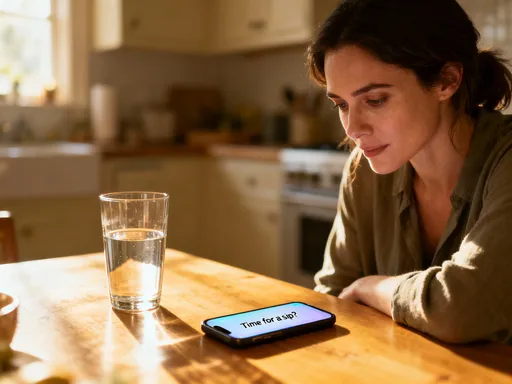
What If Your To-Do List Could Keep Up With Your Life’s Rhythm?
We’ve all been there—staring at a cluttered app, forgetting important tasks, or feeling overwhelmed by the gap between what we plan and what actually happens. Life doesn’t follow a rigid schedule, so why should our tools? What if the key to peace isn’t doing more, but using something smarter—one that bends with your days, not against them? Imagine a world where your to-do list doesn’t nag you with outdated reminders or guilt-trip you for skipping a task when your child was sick. What if it simply understood? That’s not a fantasy. It’s the quiet revolution happening in the world of everyday tech—one that’s finally catching up to the messy, beautiful rhythm of real life.
The Crack in the Daily Grind
Let’s be honest—how many times have you opened your task app only to feel worse? You tap in with good intentions, ready to conquer the day, and instead, you’re met with a red flag next to “meal prep,” a blinking reminder for “call dentist” from three days ago, and a cheerful notification that says, “You’re 73% behind on weekly goals!” Really? Because you just spent two hours helping your daughter finish her science project, and you finally folded that mountain of laundry. That doesn’t count?
This is the hidden emotional toll of traditional task management. We download these apps hoping for calm, but instead, they become silent judges. They don’t see the school play that ran late, the surprise meeting your boss called, or the fact that you drove your mom to her doctor’s appointment. They only see unchecked boxes. And slowly, that unchecked list chips away at your confidence. You start to wonder: Am I just not trying hard enough?
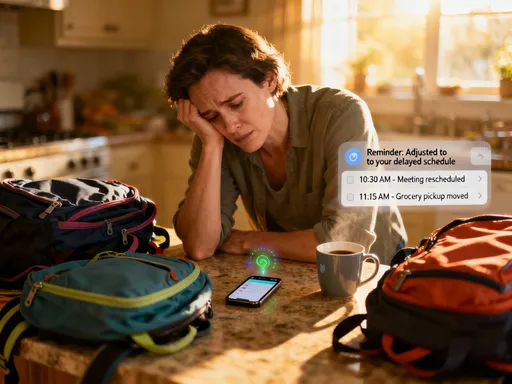
I remember one Tuesday morning that felt like it was designed to break me. I had “buy birthday gift” on my list, along with “send client report by noon” and “schedule vet appointment.” By 9 a.m., my son woke up with a fever. The vet appointment got canceled, the client email went out at 1:15 p.m., and the birthday gift? Forgotten. That evening, I opened my app and saw the same cheerful reminder: “Don’t forget the birthday gift!” I didn’t need a reminder. I needed a time machine. That moment wasn’t about forgetting—it was about realizing that my tool didn’t live in my world. It lived in some perfectly predictable universe where no one gets sick, no one needs help, and nothing unexpected ever happens. And that’s not just frustrating. It’s lonely.
When Life Changes, Why Don’t Our Apps?
Think about how often your day actually follows the plan. Rarely, right? Life is fluid. It’s a sudden rainstorm that ruins your picnic. It’s your sister calling to say she’s coming into town. It’s you waking up feeling tired and deciding, today, rest is more important than productivity. These aren’t failures. They’re life. Yet most of our digital tools treat them like errors in the system.
Why is it that when we change our minds or our circumstances shift, our apps don’t shift with us? Why does “clean garage” still pop up at 8 a.m. on a Sunday when you’ve already promised your kids a trip to the park? Why does “research retirement plans” show up at 6 p.m. when you’re mentally drained from work and just want to sit quietly with a cup of tea?
The truth is, most task managers were built for a different kind of user—one with a 9-to-5 job, predictable routines, and minimal family demands. But for so many of us, especially women managing households, careers, and care, life isn’t predictable. It’s dynamic. And when our tools don’t reflect that, we feel like we’re failing. But we’re not failing. Our tools are.
I spoke with a friend recently who had been using the same task app for years. She told me she’d started dreading opening it. “It’s like walking into a room full of people who are disappointed in me,” she said. “Every task I didn’t finish is still there, staring at me, no matter what else happened that day.” She wasn’t lazy. She wasn’t disorganized. She was simply using a system that didn’t understand her life. And that misunderstanding created guilt, stress, and a quiet sense of defeat.
The Shift: From Control to Flow
Here’s the good news: we don’t have to keep fighting against our tools. The real problem isn’t that we’re bad at managing time. It’s that we’ve been taught to manage time like it’s a machine—something to control, measure, and optimize. But life isn’t a machine. It’s more like a river—sometimes calm, sometimes rushing, always moving.
What if, instead of trying to dam the river with rigid schedules, we learned to flow with it? That’s the mindset shift that’s changing everything. It’s not about doing more. It’s about aligning with your natural rhythm—your energy, your mood, your family’s needs, your unexpected moments of inspiration.
Imagine a task system that doesn’t punish you for rescheduling, but helps you reschedule wisely. One that knows you’re more focused in the mornings, so it gently suggests tackling your most important work then. One that notices you’ve been logging later bedtimes and offers a kind nudge: “You’ve been busy. Maybe today is a good day to simplify your list.” That’s not science fiction. That’s what’s possible now.
This shift—from control to flow—changes how we relate to our tasks. Instead of feeling like a manager of a strict schedule, you become more like a gardener. You plant seeds (tasks), you tend to them when the time is right, and you accept that some days, the weather doesn’t cooperate. You don’t blame the garden. You adjust. And over time, things grow—not because you forced them, but because you worked with the conditions.
When you stop seeing productivity as a test of willpower and start seeing it as a practice of alignment, something beautiful happens. You feel less pressure. You make fewer promises to yourself that you can’t keep. And slowly, the guilt fades. Because now, your system isn’t fighting you—it’s supporting you.
Designing with Life, Not Against It
So what does a tool that flows with life actually look like? It’s not about flashy features or complex dashboards. It’s about design that respects how humans really live. The best new apps aren’t trying to make you more disciplined. They’re trying to make life easier.
Take smart rescheduling. Instead of nagging you about a missed task, some apps now ask, “Would you like to move this to tomorrow?” or even better, “Based on your calendar, you have a quiet afternoon Thursday. Would you like to reschedule this task then?” No guilt. No red flags. Just a quiet, helpful suggestion.
Then there’s context-aware reminders. Imagine you have “buy dog food” on your list. Instead of popping up at 3 p.m. while you’re in a meeting, a smarter app waits until you’re near a pet store and sends a gentle notification: “You’re close to the pet shop. Need dog food?” It’s like having a thoughtful friend who knows your habits and offers help at just the right moment.
Some apps now group your errands by location, so you’re not driving across town three times a day. Others track your energy levels—if you’ve been logging low motivation, they might suggest lighter tasks or even remind you to take a walk. One app I tried recently noticed I hadn’t logged any “me time” in a week and sent a message: “You’ve been busy. How about 15 minutes to read or stretch today?” It wasn’t demanding. It was caring.
And here’s one that changed everything for me: an app that syncs with my calendar and automatically pauses tasks when I’m running late. No more frantic toggling between apps when I’m already stressed. It just adjusts. It understands that life happens. And in that small moment, I felt seen.
The Quiet Power of Small Adjustments
You don’t need to overhaul your entire system to feel the benefits. In fact, big changes often fail because they’re too much, too fast. Lasting transformation comes from small, consistent tweaks—tiny shifts that add up over time.
One of the most powerful changes I made was setting just one flexible anchor each day. Not a long list. Not a perfect schedule. Just one thing I could count on—like a 10-minute evening review. I’d sit with a cup of tea, look at what I’d accomplished (not just what I hadn’t), and gently move unfinished tasks to the next day. No drama. No judgment. Just a moment of reflection.
That one habit changed how I saw my entire week. Because instead of waking up to a mountain of yesterday’s failures, I started each morning with a clean slate—curated, not cluttered. The app didn’t erase what I hadn’t done. It helped me decide what mattered now.
Let me walk you through a recent day. I woke up, checked my app, and saw three main tasks: “prepare school lunch,” “answer two emails,” and “call plumber.” No long list. No pressure. I did the lunch first—easy. Then I opened my email and realized one of the messages needed more time than I had. Instead of stressing, I tapped a button that said “Snooze until tomorrow,” and the app tucked it away gently. Later, when I was out running errands, my phone buzzed: “You’re near the hardware store. Plumber’s number is saved in your contacts.” I made the call from the parking lot. Done.
That night, during my 10-minute review, I noticed I hadn’t done “organize pantry”—but that was okay. The app didn’t shame me. It simply asked, “Would you like to move this to Saturday?” I said yes. And just like that, the guilt was gone. The task was still there, but it wasn’t haunting me. It was waiting, patiently, for the right moment.
Beyond Productivity: Reclaiming Peace
Here’s what no one talks about enough: when your tasks stop living in your head, your mind becomes quieter. You stop rehearsing your to-do list at 2 a.m. You stop worrying about forgetting the important stuff. And in that space, something beautiful grows—presence.
Presence with your kids. Presence with your partner. Presence with yourself. When you’re not constantly scanning the mental horizon for what you might have missed, you can actually enjoy the moment you’re in.
I’ll never forget the day I got a text from my husband: “Thank you for remembering Mom’s birthday.” I blinked. I hadn’t remembered. Not actively. But my app had. It sent me a reminder a week in advance, suggested a gift based on her interests, and even drafted a card message I could edit. I clicked “send” with one tap. No stress. No last-minute panic. And my mother-in-law was thrilled.
That moment wasn’t about the gift. It was about trust. I realized I could finally trust my system. And when I trusted my system, I began to trust myself again. The constant mental load—the invisible labor of remembering everything—was lifting. And in its place, I found something I hadn’t felt in years: peace.
One user I spoke with put it perfectly: “I used to feel like I was always one missed task away from falling apart. Now, I feel like I’m holding it together, even when life gets messy. My app doesn’t fix everything, but it helps me breathe.” That’s the real win—not getting more done, but feeling more like yourself.
Your Rhythm, Your Rules
Here’s the truth no one will tell you: there is no perfect app. There is no one-size-fits-all system. What works for your friend might not work for you. And that’s okay. The goal isn’t to find the fanciest tool or the one with the most features. The goal is to find the one that feels like a natural extension of your life.
Maybe that means an app that speaks softly, not loudly. One that suggests, not demands. One that learns your patterns and adapts—just like a good friend would. The best tech doesn’t make you more efficient. It makes you feel more human.
So if you’ve been beating yourself up for not keeping up with your to-do list, stop. You’re not the problem. The tool might be. And the good news is, you don’t have to live that way anymore. You don’t have to choose between staying on top of things and staying sane.
There’s a new way—one that doesn’t ask you to be perfect, but simply to be present. One that doesn’t add to your load, but helps carry it. It’s not about doing more. It’s about living better. So take a breath. Look at your current system. Ask yourself: Does this help me, or does it hurt me? And if it’s not helping—there’s something out there that will.
You don’t need to chase productivity. You need to build a life that flows. And with the right tool, that’s finally possible. Not because it’s magic. But because it finally understands you. And when your to-do list feels like a quiet ally instead of a loud critic, you’ll wonder how you ever lived without it. That’s not just better tech. That’s better living.