Color, Cliffs, and Centuries: Why Cinque Terre’s Architecture Stole My Heart
You know that feeling when a place just hits you? For me, it was Cinque Terre. Nestled into rugged cliffs, these five villages don’t just sit in Italy—they cling to it, painted in bold hues and built with centuries of grit. I never expected architecture to move me, but here, every stone and shutter tells a story of survival, beauty, and harmony with the wild sea below. This is more than a destination—it’s a masterpiece you can walk through. From the first glimpse of Monterosso’s terracotta rooftops to the lemon-yellow alleys of Vernazza, the villages unfold like a living canvas where human resilience meets natural drama. And while postcards capture their charm, only presence reveals their pulse.
First Impressions: The Visual Impact of Cinque Terre
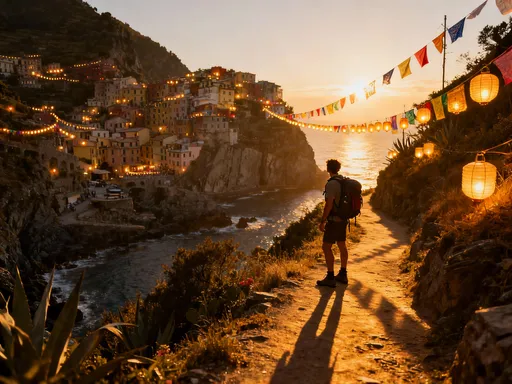
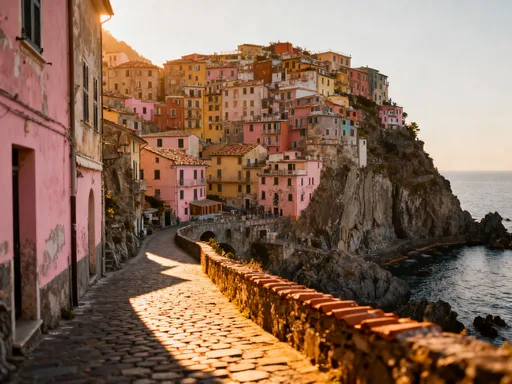
The first sight of Cinque Terre often comes from the train window—a sudden, breathtaking reveal as the coastal tunnel gives way to open air. There, suspended above turquoise waters, are clusters of homes stacked like colorful boxes, cascading down sheer rock faces toward tiny harbors. The contrast is immediate and overwhelming: the soft pastels and deep ochres of the buildings against the untamed green of the hills and the shimmering Mediterranean. It feels less like architecture and more like nature itself has been painted—organized, yet wild. Many visitors describe it as dreamlike, almost unreal, as though they’ve stepped into a watercolor brought to life.
This visual drama is not accidental. The layout of the five villages—Monterosso al Mare, Vernazza, Corniglia, Manarola, and Riomaggiore—is dictated entirely by the land. With no room for sprawling development, the buildings rise vertically, clinging to every available inch of cliffside. Narrow footpaths weave between them, and staircases cut through the rock like veins. From a distance, the villages appear delicate, but up close, their strength is evident. Each structure is anchored deeply into the terrain, shaped by generations of adaptation. The emotional impact is powerful because it is authentic—this beauty was not designed for tourists but born of necessity.
The immediate awe many travelers feel stems not just from color or scenery, but from the sense of harmony between human creation and natural force. These villages do not dominate the landscape—they respond to it. The bright facades, often mistaken for mere decoration, were historically practical, using pigments that protected plaster from salt and sun. Yet over time, they evolved into a cultural identity, a shared visual language that binds the five towns together. The architecture invites not just admiration, but reflection: how can something so fragile-looking endure for centuries? The answer lies in the next layer of the story—the land itself.
The Origins: How Geography Shaped the Built Environment
To understand Cinque Terre’s architecture, one must first understand its geography. The Ligurian coast is unforgiving—steep, rocky, and carved by millennia of erosion. Flat land is nearly nonexistent, making traditional agriculture and construction nearly impossible. In response, the early inhabitants developed a way of building that worked with, rather than against, the terrain. Homes were constructed vertically, one on top of the other, connected by narrow alleys and staircases. This vertical stacking was not a stylistic choice but a survival strategy, maximizing limited space while minimizing the need for extensive excavation.
The lack of roads and flat surfaces also shaped transportation and trade. Before modern infrastructure, goods were brought in by boat or carried along footpaths that linked the villages. Even today, cars are rare, and the primary mode of arrival is by rail or on foot. This isolation fostered a self-reliant community, where every structure had to serve multiple purposes. A ground floor might house a fishing boat at night, while upper levels provided living space. Shared walls reduced material use and helped with insulation, creating a dense, interconnected urban fabric that feels intimate rather than crowded.
Terraced farming played a crucial role in shaping the built environment. To grow grapes and olives, villagers carved horizontal strips into the slopes, supported by dry-stone walls that still line the hillsides. These terraces not only provided food but also stabilized the soil, preventing landslides that could destroy homes below. The architecture thus emerged from a deep dialogue between people and place—a constant negotiation between human needs and natural constraints. Every building, path, and wall reflects this balance, a testament to centuries of observation, trial, and resilience.
This relationship between geography and design is what gives Cinque Terre its authenticity. Unlike planned cities or resort towns, these villages grew organically, shaped by necessity and sustained by tradition. Their irregular layouts, asymmetrical facades, and winding passages are not flaws but features—evidence of a living, evolving settlement. The architecture is not static; it is a record of how people have learned to live within limits, turning challenges into beauty.
Materials and Methods: Building on the Edge
The durability of Cinque Terre’s buildings lies in their simplicity. Traditional construction relied on locally sourced materials—limestone, sandstone, and schist—quarried from the surrounding hills. These stones were cut by hand and fitted together without mortar in many cases, especially in retaining walls and foundations. This dry-stone technique, passed down through generations, allows for slight movement without collapse, essential in an area prone to seismic activity and erosion. The homes themselves were built using compact masonry, with thick walls that provide insulation against both summer heat and winter chill.
One of the most remarkable aspects of the construction is how buildings are anchored into the bedrock. Foundations are often carved directly into the cliff face, with support beams embedded deep into natural crevices. This integration with the rock not only stabilizes the structures but also minimizes their visual impact, allowing them to appear as extensions of the landscape. Roofs are typically made of terracotta tiles, designed to withstand salt spray and heavy rains. Over time, these materials weather gracefully, their colors softening and blending with the surrounding greens and blues.
The terraced walls, essential to both agriculture and safety, are engineering feats in their own right. Built without mortar, they rely on precise stone placement and gravity to hold back tons of soil. When properly maintained, they can last for centuries. However, neglect can lead to collapse, which in turn triggers landslides that threaten homes and pathways. This interdependence—between wall, soil, and building—means that preservation is not just about aesthetics but survival. Every repaired wall is a defense against the mountain’s slow descent toward the sea.
Modern restoration efforts continue to honor these traditional methods. While some updates include reinforced concrete or weatherproof coatings, the guiding principle remains authenticity. Repairs must match original materials and techniques as closely as possible, ensuring that new work does not disrupt the historic fabric. This commitment to continuity is why, even after floods or storms, the villages retain their character. The architecture is not frozen in time—it is carefully maintained, a living tradition that respects the past while adapting to the present.
Color as Identity: The Meaning Behind the Hues
The vibrant facades of Cinque Terre are perhaps its most iconic feature. From sunflower yellow to deep coral, the colors seem almost festive, as if the villages are celebrating their existence. But these hues were not chosen for whimsy. Historically, the paints used were made from natural pigments mixed with lime or fish oil, serving a protective function. The layers shielded the plaster from moisture, salt, and UV damage—critical in a coastal environment where constant exposure to sea air can erode buildings quickly. Over time, what began as practicality became identity.
Each village developed its own color palette, influenced by local materials and traditions. Monterosso, the largest of the five, features warmer tones—ochre, rust, and cream—reflecting its slightly more open layout and historic role as a fishing and agricultural hub. Vernazza, often considered the most picturesque, embraces cooler shades—pale yellow, seafoam green, and soft pink—complementing its compact harbor and shaded piazzas. Manarola and Riomaggiore, nestled in deeper clefts, use deeper reds and oranges, creating a striking contrast against the dark rock and deep water. Corniglia, perched higher on a rocky promontory, favors lighter, more neutral tones, giving it a quieter, more contemplative feel.
Today, color is regulated to preserve visual harmony. Property owners who wish to repaint must follow municipal guidelines that specify approved shades, ensuring that new coats do not disrupt the collective aesthetic. This is not about enforcing uniformity, but about maintaining a shared language of color that defines the region. Unauthorized bright blues or neon greens are not allowed, not because they are ugly, but because they break the rhythm of the landscape. The result is a cohesive yet varied streetscape, where no two buildings are exactly alike, but all belong to the same story.
This regulation reflects a broader cultural value: that beauty is communal. In Cinque Terre, architecture is not about individual expression alone, but about contributing to a collective image. A homeowner may love purple, but if it doesn’t fit, it won’t be approved. This balance between personal choice and public good is rare in modern development, yet it is essential here. The colors are not just decoration—they are a form of stewardship, a way of saying that this place belongs to everyone, and its beauty must be protected for all.
Life in the Vertical: How Architecture Supports Community
Living in Cinque Terre requires adaptation. Homes are narrow and tall, often just a few meters wide but rising three or four stories. Rooms are multi-functional: a kitchen may double as a dining area, a bedroom may open onto a shared landing. Staircases—both indoor and outdoor—are central to daily life, connecting levels within homes and linking houses to the public pathways. These vertical arrangements foster a sense of closeness, not just physically but socially. Neighbors see each other frequently, share resources, and often rely on one another for small tasks, from watching a child to passing up groceries.
The caruggi—narrow, winding alleyways—are the lifeblood of the villages. Too tight for vehicles, they are designed for foot traffic, encouraging slow movement and frequent interaction. A morning walk to the market becomes a series of small conversations: a greeting from the baker, a comment on the weather from a neighbor hanging laundry. These spaces are not merely corridors; they are social connectors, where community is built one step at a time. Even in high season, when tourists fill the paths, locals maintain their routines, moving through the crowds with quiet familiarity.
Rooftop terraces and shared courtyards provide rare open space. Used for drying clothes, growing herbs, or hosting family meals, these areas are extensions of the home, maximizing utility in a place where land is scarce. Many homes have small balconies or window boxes, where geraniums and ivy add splashes of green to the colorful walls. These personal touches soften the stone, making the vertical city feel lived-in and warm.
The architecture also supports economic life. Ground floors often serve as shops, cafes, or workshops, blending residential and commercial use. A fisherman might store his nets in the same building where his family lives, while a shopkeeper opens her doors directly onto the alley. This integration reduces the need for travel and keeps daily life efficient. Children grow up knowing their neighbors, elders are cared for within the community, and traditions are passed down through shared spaces. In a world of increasing isolation, Cinque Terre offers a model of interdependence, where design enables connection.
Preservation vs. Tourism: The Delicate Balance
Cinque Terre’s popularity is both a blessing and a challenge. Designated a UNESCO World Heritage Site in 1997, the region attracts millions of visitors each year, drawn by its beauty and cultural significance. While tourism brings economic benefits, it also strains the fragile infrastructure. Foot traffic erodes ancient pathways, waste management becomes a concern, and rising property values threaten to displace long-term residents. The very qualities that make the villages special—narrow streets, historic buildings, limited space—are also what make them vulnerable to overcrowding.
To address these pressures, local authorities have implemented strict preservation policies. The Cinque Terre National Park manages conservation efforts, regulating construction, restoration, and visitor access. A hiking pass system controls foot traffic on the famous coastal trails, helping to prevent erosion and maintain safety. Buildings undergoing renovation must follow detailed guidelines: original materials must be used, structural changes are limited, and color choices are approved by municipal committees. These rules ensure that modernization does not come at the cost of authenticity.
One of the most effective tools has been the promotion of off-season travel. By encouraging visits in spring and autumn, when temperatures are mild and crowds thinner, the region spreads demand and reduces peak-season strain. Local businesses benefit from longer operating seasons, and visitors enjoy a more relaxed experience. Educational programs also play a role, teaching tourists about the history and fragility of the landscape, fostering a sense of responsibility.
The goal is not to limit access, but to ensure sustainability. Cinque Terre is not a museum to be viewed from behind glass; it is a living community that must continue to function. Preservation means protecting not just buildings, but the way of life they support. This requires cooperation between residents, officials, and visitors—each group playing a part in maintaining the balance between use and care. The architecture, after all, was built to be lived in, not just admired from a distance.
Beyond the Postcard: Seeing the Architecture in Motion
To truly appreciate Cinque Terre, one must move beyond the snapshot. The postcard view—colorful houses against the sea—is stunning, but it captures only a moment, a still frame. The real magic happens in motion: the way sunlight shifts across a wall at dawn, turning pink plaster into gold; the sound of shutters opening as a grandmother leans out to water her flowers; the rhythm of fishermen hauling in nets as gulls circle above. These small, everyday acts reveal the architecture as a living system, not a static display.
Walking the trails at different times of day offers new perspectives. In the early morning, mist rises from the valleys, softening edges and muting colors. By midday, the sun highlights textures—the roughness of stone, the flaking paint, the vines creeping up corners. At dusk, warm light spills from windows, and the villages glow like lanterns. Each hour tells a different story, showing how light, weather, and human activity shape the experience of place.
Observing daily life deepens the connection. Watching a delivery worker navigate a steep staircase with a cart, or seeing children play in a small piazza, reminds us that this is a home, not a stage set. The architecture supports real needs—shelter, work, gathering, rest. Its beauty is not separate from its function but born from it. When a clothesline stretches between buildings, or a cat naps on a sun-warmed step, the human scale becomes clear.
Cinque Terre is not frozen in time. It evolves, adapts, and endures. But its core remains: a dialogue between people and landscape, built over centuries, written in stone and color. To walk its paths is to participate in that dialogue, to witness how architecture, when rooted in respect and necessity, can become poetry. It is not just a place to visit, but a way of seeing—the world, and our place within it, a little more clearly.