You Won’t Believe What I Discovered Exploring Brasília Off the Radar
Brasília isn’t just government buildings and wide-open skies — I went beyond the guidebooks and found something real. This city surprised me with its rhythm, art, and hidden corners where locals live, eat, and connect. If you think it’s just a planned capital with no soul, think again. My private journey uncovered experiences most travelers never see — and trust me, you’ve gotta feel this city to believe it.
Reimagining Brasília: Beyond the Concrete Vision
When most people hear the name Brasília, they picture sweeping boulevards, futuristic government structures, and a cityscape drawn from a blueprint. Designed in the late 1950s by urban planner Lúcio Costa and architect Oscar Niemeyer, Brasília was conceived as a bold experiment in modernist urban design—a capital built from scratch in Brazil’s interior to symbolize progress and national unity. It earned UNESCO World Heritage status for its architectural innovation, but it has also long been criticized as a sterile, soulless city, more focused on form than human connection. Many travelers pass through quickly, snapping photos of the Cathedral or the National Congress, then move on, convinced there’s little more to uncover.
Yet arriving in Brasília with that same skepticism, I found myself unexpectedly moved. The vast skies, the quiet plazas, the way sunlight plays across curved concrete—there’s a meditative quality to the city that few anticipate. The wide avenues, often described as impersonal, instead offered breathing room, a sense of openness rare in crowded urban centers. I realized that Brasília doesn’t reveal itself at first glance. It asks for patience. It rewards those who slow down, who wander beyond the monumental core, who engage with the city not as a political symbol but as a living, evolving community.
What surprised me most was the human scale tucked within the grand design. Neighborhoods like Asa Sul and Asa Norte, laid out in Costa’s famous airplane-shaped plan, are filled with tree-lined residential blocks, small cafes, and community gardens. Families gather in quiet parks after work. Children ride bikes along shaded sidewalks. There’s a rhythm here, a daily life that persists beneath the city’s formal structure. Brasília is not cold—it’s contemplative. It doesn’t shout; it whispers. And once you learn to listen, its warmth becomes unmistakable.
The Pulse of Local Life: Markets, Music, and Morning Rituals
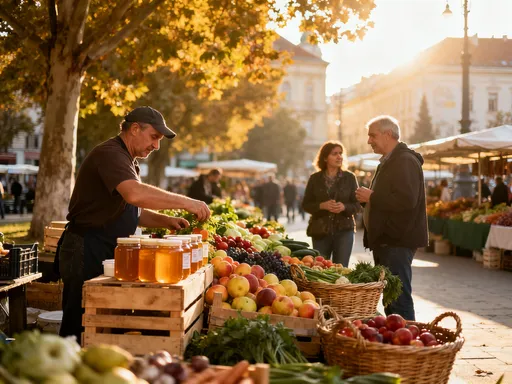
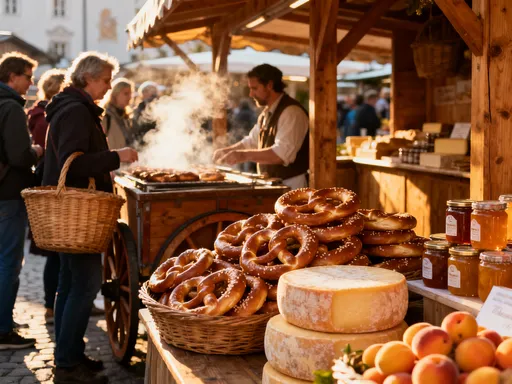
One of the most authentic ways to experience Brasília is through its vibrant open-air markets, known locally as feiras livres. These are not tourist attractions but essential parts of community life, where residents come to shop, socialize, and savor fresh, regional food. The Feira da Torre, located near the iconic TV Tower, is among the largest and most beloved. Every Saturday morning, the plaza transforms into a bustling marketplace, alive with color, scent, and sound. Rows of stalls overflow with tropical fruits—bright yellow cajás, spiky jackfruits, and translucent mangos that drip with juice. Vendors proudly display handmade cheeses from nearby farms, jars of raw honey, and bundles of fresh herbs used in traditional Central Brazilian cooking.
Wandering through the market, I stopped at a shaded tent to sip chilled coconut water, served in the shell with a straw. Nearby, a small band played forró, a lively northeastern Brazilian music characterized by accordion, triangle, and zabumba drum. Couples swayed gently on the cobblestones, smiling as children darted between tables. I struck up a conversation with a vendor named Dona Marta, who’s sold pastel de angu at the same stall for over twenty years. Her recipe—a crisp, corn-based pastry filled with shredded beef, olives, and green peppers—has been passed down through generations. She laughed as she handed me a warm one, saying, “This is the real Brasília. Not the one on postcards, but the one that feeds people every day.”
These morning rituals offer a glimpse into the city’s heart. The feiras are more than places to shop—they are spaces of connection, where neighbors catch up, musicians share their craft, and traditions are preserved. Unlike the formal grandeur of the government district, here the city feels intimate, grounded, and deeply alive. For travelers willing to rise early and engage, the markets offer an immediate sense of belonging, a reminder that even in a planned capital, community grows organically.
Art in Unexpected Places: Street Murals and Hidden Galleries
While Brasília is celebrated for its monumental architecture, its artistic spirit thrives in less obvious corners. Beyond the polished facades of government buildings, a dynamic street art movement has taken root, transforming quiet neighborhoods into open-air galleries. In districts like Vila Planalto and Taguatinga, walking tours reveal murals that blend political commentary, indigenous symbolism, and abstract expression. One striking piece in Taguatinga’s cultural center depicts a woman’s face composed of native cerrado flowers, her eyes reflecting the city’s skyline—a powerful fusion of nature and urban life. Another, painted on the side of a community center, honors Afro-Brazilian leaders with bold, geometric patterns inspired by traditional textiles.
These works are not random acts of graffiti but part of organized cultural initiatives. Local collectives, often supported by municipal programs, invite artists to use public walls as canvases for storytelling and social dialogue. The result is a cityscape that evolves with its people, where art becomes a tool for reflection and unity. I joined a guided mural tour led by a young artist named Rafael, who explained how these projects help residents reclaim spaces that once felt impersonal. “The city was built from above,” he said. “Now we’re filling it in from below.”
Complementing the outdoor art scene are intimate cultural venues like the Centro Cultural Banco do Brasil (CCBB Brasília). Housed in a sleek modernist building, the center hosts rotating exhibitions, film screenings, and live performances. During my visit, a photography exhibit documented everyday life in Brasília’s satellite towns, capturing moments of joy, resilience, and quiet dignity. In a small auditorium, a poet read verses about belonging and displacement, her words resonating in the hushed room. These spaces prove that Brasília’s cultural life is not confined to official institutions—it pulses in galleries, community halls, and alleyways, waiting to be discovered.
Off-the-Beaten-Path Nature: Waterfalls, Trails, and Secret Lakes
For a city designed with precision and order, Brasília offers surprising access to untamed natural beauty. Just a short drive from the urban grid, the cerrado—a vast tropical savanna ecosystem—stretches across rolling hills, dotted with rocky outcrops and seasonal streams. Protected areas like the Água Mineral Park and the Saltinho Biological Reserve provide refuge for native flora and fauna, including armadillos, capybaras, and over 200 species of birds. These are not manicured parks but living landscapes, where the rhythm of nature unfolds without schedule or spectacle.
One of the most rewarding escapes is the Saltinho Waterfall, nestled within a conservation area about 30 kilometers from the city center. The trail begins with a gentle descent through dry forest, the air rich with the scent of wild basil and burnt earth. As you approach, the sound of rushing water grows, and then the cascade appears—a slender ribbon of white plunging into a clear, emerald pool. On weekends, families gather here to swim, picnic, and rest beneath the trees. I sat on a sun-warmed rock, watching children leap from the lower ledge into the cool water, their laughter echoing through the canyon. The experience felt worlds away from the formal plazas of central Brasília, yet it is an essential part of what the city offers.
Guided eco-tours, led by local naturalists, enhance the experience with insights into the cerrado’s delicate ecology. These guides explain how the region’s deep-rooted plants survive long dry seasons, how fire plays a natural role in regeneration, and why conservation is critical in the face of urban expansion. The best times to visit are during the rainy season (October to March), when the waterfalls flow strongest and wildflowers bloom in bursts of purple and gold. For travelers seeking balance, these natural retreats provide a grounding counterpoint to the city’s architectural rigor—a reminder that Brasília exists not apart from nature, but within it.
Taste of Brasília: From Regional Cuisine to Underground Dining
The culinary landscape of Brasília has undergone a quiet revolution. While the city was once known primarily for its all-you-can-eat buffets and government-adjacent dining, a new generation of chefs is redefining its flavors by turning to regional ingredients and ancestral techniques. Central Brazil, encompassing the states of Goiás and Minas Gerais, has a rich culinary tradition rooted in rural life, where meals were built around what the land provided—beans, corn, leafy greens, and slow-cooked meats. Today, these traditions are being honored in innovative ways.
One evening, I attended a jantar nas casas—an underground dinner hosted in a private home. Organized through a local network of food enthusiasts, these gatherings invite guests into intimate settings where home cooks or guest chefs prepare multi-course meals inspired by regional recipes. That night, the menu featured feijão tropeiro, a hearty dish of beans, cassava flour, bacon, and eggs, cooked slowly until fragrant and golden. Next came frango com ora-pro-nóbis, tender chicken stewed with a leafy green known for its nutritional value and slightly tangy flavor. Each dish was served with coalho cheese grilled over open flame, its exterior crisp, the inside soft and stretchy. Over glasses of guava liqueur, we shared stories, asked questions, and lingered long after the last plate was cleared.
These experiences go beyond dining—they are acts of cultural exchange. Unlike formal restaurants, jantares nas casas emphasize connection, storytelling, and the pleasure of eating together. They reflect a broader shift in how Brasília residents relate to food: not as spectacle, but as heritage. Even in established eateries, there’s a growing emphasis on sourcing from local farms, reducing waste, and preserving traditional methods. To taste Brasília today is to taste its past, its values, and its evolving identity—one plate at a time.
Private Moments in Public Spaces: Architecture with Feeling
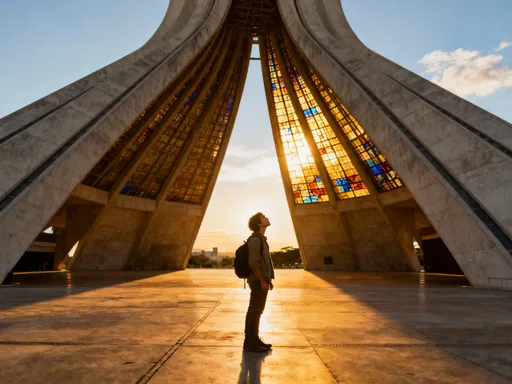
The iconic landmarks of Brasília are often photographed, but rarely felt. The Cathedral of Brasília, with its soaring hyperbolic structure and stained-glass ceiling, is a masterpiece of modernist design. Yet seeing it in a picture is nothing like standing inside as sunlight filters through colored glass, casting kaleidoscopic patterns on the marble floor. On a quiet weekday morning, I entered alone. The air was cool, the space hushed. Above, sixteen curved columns rise like hands in prayer, enclosing a sense of awe that transcends architecture. It was not the monumentality that moved me, but the intimacy—the way the space invites silence, reflection, presence.
Similarly, the Praça dos Três Poderes, home to the Presidential Palace, the National Congress, and the Supreme Court, is often seen as a symbol of political power. But at sunset, when the golden light bathes the white marble and the flag lowers in ceremony, it becomes something else—a place of quiet dignity. I sat on a bench as families strolled by, children flying kites shaped like birds. A street musician played a soft melody on a flute. The grandeur remained, but it was softened by daily life. Even the Palácio do Planalto, with its elegant ramps and reflecting pools, felt accessible in that moment, not as a seat of authority, but as part of the city’s living fabric.
These spaces were designed to inspire, and they do—but not always in the ways intended. Their power lies not in their scale, but in the moments of connection they allow. When you stop rushing from site to site, when you sit and watch, when you let the light and silence speak, Brasília reveals a different kind of beauty—one that is emotional, personal, and deeply human.
Why Brasília Changes You: Slowing Down to See Clearly
Leaving Brasília, I realized something unexpected: the city had changed me. Not through grand revelations, but through small, cumulative moments—the taste of warm pastel de angu at the market, the sound of forró music on a Saturday morning, the cool shock of waterfall spray on my skin, the quiet inside the cathedral. Brasília does not dazzle; it reveals. It asks for time, for presence, for a willingness to look beyond the surface.
What makes Brasília unique is not just its architecture, but the way it invites introspection. In a world of constant noise and motion, this city offers space—literal and metaphorical—to breathe, to think, to feel. It challenges the traveler to reconsider what a capital city can be: not just a center of power, but a place of community, art, and natural harmony. The stereotypes of sterility and coldness fade when you experience its markets, murals, trails, and home-cooked meals. What remains is a city built on ideals, now lived in by real people with real stories.
To visit Brasília is to practice a different kind of travel—one that values depth over speed, connection over checklist tourism. It teaches patience. It rewards curiosity. And in its open skies and quiet corners, it offers a rare gift: clarity. So if you go, don’t rush. Walk slowly. Talk to someone at the market. Follow a mural to its end. Let the city surprise you. Because Brasília is not what you expect. It’s what you discover when you stop looking for what you thought you’d find.