You Won’t Believe What I Found in Singapore’s Hidden Alleys
Singapore isn’t just sleek skyscrapers and spotless streets—it’s alive with culture hiding in plain sight. I stumbled upon vibrant neighborhoods where traditions thrive, from morning prayers in centuries-old temples to hawker stalls run by families for generations. Every corner tells a story. This is more than tourism; it’s connection. If you think you know Singapore, think again—its soul is deeper than the guidebooks show.
Beyond Marina Bay: Discovering Singapore’s Cultural Heart
Singapore presents a fascinating duality: a global financial hub wrapped in the warmth of deep-rooted traditions. While Marina Bay Sands and Orchard Road dazzle with modernity, the city’s true heartbeat pulses in its historic districts, where cultural identity is not preserved behind glass but lived daily. It was on a quiet Tuesday morning, wandering away from the tourist trails, that I first felt this shift—an elderly woman in a sarong offered me jasmine garlands outside a temple, her smile as welcoming as if I were family. That moment changed my perception. Singapore is not just efficiently clean and technologically advanced; it is profoundly human.
What makes this balance remarkable is how deliberately it has been maintained. Amid skyscrapers and rapid urban development, the government and local communities have worked together to protect cultural enclaves. Heritage conservation areas are clearly demarcated, and architectural guidelines ensure that even new constructions in historic neighborhoods echo traditional shophouse designs. More importantly, the people themselves are custodians of their customs. Families continue to gather in clan associations, elders pass down recipes and rituals, and festivals are celebrated with the same fervor as decades ago. This is not cultural performance for tourists—it is continuity.
For visitors, understanding this duality enriches the travel experience. Rather than viewing Singapore as merely a stopover or business destination, one begins to appreciate it as a living mosaic of identities. The city’s ability to honor its past while embracing the future offers a powerful model for urban life worldwide. Travelers who seek only the glossy surface miss the depth beneath. But those who venture beyond the postcard image discover a place where tradition isn’t frozen in time—it evolves, breathes, and welcomes you in.
Little India: A Sensory Explosion You Can’t Unsee
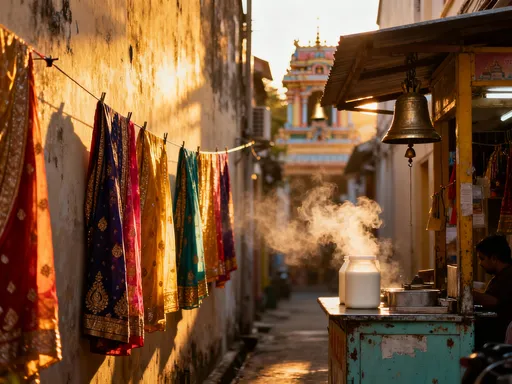
Walking into Little India is like stepping into a different world—one where color, sound, and scent converge in a joyful symphony. The air hums with the fragrance of sandalwood, turmeric, and frying parathas. Bicycles jingle past spice-laden shopfronts, and the golden dome of the Sri Veeramakaliamman Temple glows under the tropical sun. This neighborhood, originally settled by Indian laborers in the 19th century, remains a vibrant center of Tamil culture in Southeast Asia. Here, tradition isn’t confined to temples or festivals; it spills onto the streets, into homes, and across dinner tables.
The Sri Veeramakaliamman Temple, established in 1855, stands as a testament to resilience and devotion. Its intricate gopuram (tower) is adorned with dozens of brightly painted deities, each telling a story from Hindu mythology. Visitors are welcome to observe prayers during early morning and evening pujas, though modest dress—covering shoulders and knees—is expected. During Deepavali, the Festival of Lights, the entire district transforms. Homes and shops are illuminated with oil lamps, and families gather to share sweets like murukku and kueh lapis. The celebration is both spiritual and communal, a reminder that light triumphs over darkness, and unity over division.
One of my most memorable mornings began at a traditional milk booth, where stainless steel flasks are filled with fresh, frothy milk served in ceramic cups. No menus, no frills—just a simple exchange and a warm nod. Nearby, I visited a family-run textile shop where rolls of silk and cotton in dazzling hues lined the walls. The owner, Mrs. Lakshmi, showed me how brides still choose handwoven saris for their weddings, each pattern carrying symbolic meaning. She spoke of her daughter learning the business, not out of obligation, but pride. These small interactions revealed a deeper truth: cultural preservation here is not forced—it is cherished.
For travelers, respectful exploration enhances the experience. Visiting in the morning offers a quieter, more authentic glimpse of daily life. Wearing modest clothing and removing shoes before entering temples shows consideration. Asking permission before photographing people or religious spaces fosters goodwill. And trying the food—whether a flaky roti prata dipped in curry or a cooling glass of sugarcane juice—opens a direct line to the culture. Little India doesn’t just welcome curiosity; it rewards it with warmth and flavor.
Chinatown’s Living History: Where Past Meets Present
Singapore’s Chinatown is not a museum—it is a neighborhood where history lives in the rhythm of everyday life. Cobblestone alleys wind past shophouses with ornate facades, their balconies draped in laundry and potted plants. The scent of incense drifts from ancestral halls, mingling with the aroma of steaming dumplings. This area, once home to early Chinese immigrants from Fujian, Guangdong, and Hainan, has evolved without losing its soul. Today, it balances heritage with modern vitality, offering visitors a rare example of urban renewal done with cultural sensitivity.
At the heart of the district stands the Buddha Tooth Relic Temple, a magnificent structure built in the style of Tang Dynasty architecture. Inside, the atmosphere is serene, with soft chants and the gentle ringing of bells. The temple houses what is believed to be the sacred tooth relic of the Buddha, drawing pilgrims and visitors alike. But beyond its spiritual significance, the temple also serves as a cultural center, hosting meditation sessions, calligraphy workshops, and tea ceremonies. These programs invite participation, allowing even first-time visitors to engage meaningfully with Buddhist traditions.
Equally important are the clan associations—community hubs established by immigrant groups to support newcomers and preserve regional customs. I was humbled to be invited into one such hall, where elderly men played mahjong and shared stories over oolong tea. The simplicity of the space, with its wooden benches and faded photographs of ancestors, spoke volumes about continuity and belonging. These associations still provide social services, host reunion dinners, and organize ancestral worship during Qingming Festival, proving that lineage and community remain central to identity.
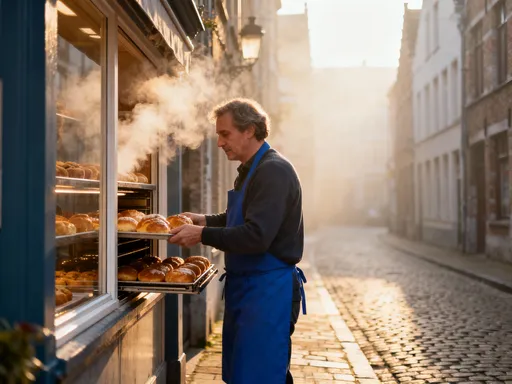
Morning in Chinatown offers a special kind of magic. In the courtyard of a quiet temple, a group of seniors moves through tai chi with graceful precision, their movements synchronized with the rising sun. Nearby, a 50-year-old dim sum restaurant opens its doors, steam billowing from bamboo baskets filled with har gow and siu mai. The owner, Mr. Wong, told me his father started the stall with a single cart. Now, his grandchildren help on weekends. “We don’t cook for tourists,” he said with a smile. “We cook for the people who’ve eaten here for decades.” This blend of authenticity and evolution defines Chinatown—not a frozen relic, but a neighborhood that honors its past while moving forward.
Kampong Glam: Culture, Coffee, and Creative Revival
Kampong Glam, once the seat of the Malay royalty, remains a cornerstone of Singapore’s Muslim and Malay community. The Sultan Mosque, with its golden dome and majestic prayer hall, anchors the neighborhood both physically and spiritually. Built in 1824 and rebuilt in the 1920s, it continues to serve as a place of worship and community gathering. On Fridays, the call to prayer echoes through the streets, and families arrive in their finest attire. Yet, Kampong Glam is not frozen in time—it is a dynamic space where tradition and creativity coexist in harmony.
Walking along Bussorah Street, I noticed how heritage shophouses now house independent cafes, art galleries, and design studios. One such space, tucked behind a restored facade, is a specialty coffee shop where baristas brew single-origin beans using traditional Malay brewing methods. The owner, a young designer named Amir, explained how he wanted to create a space that honored his roots while embracing modern tastes. “Our culture isn’t just about the past,” he said. “It’s about how we express it today.” This spirit of innovation is evident throughout the district, where batik prints are reimagined on fashion labels, and calligraphy artists blend Arabic script with contemporary street art.
I spent an afternoon with a local artisan, Mrs. Aisha, who has been practicing batik for over forty years. In her small workshop, she demonstrated the painstaking process of wax-resist dyeing, each pattern drawn freehand with a tjanting tool. Her hands moved with precision, guided by decades of muscle memory. “This isn’t just fabric,” she said. “It’s a story—of family, of faith, of identity.” She teaches workshops to young people, ensuring the craft survives. Her daughter, a graphic designer, now helps digitize patterns for modern applications, bridging generations and mediums.
What makes Kampong Glam so compelling is its authenticity. Unlike areas that feel overly curated for tourists, this neighborhood retains its soul. Families still live here, children play in the alleys, and evening prayers bring the community together. Visitors are welcome, but not catered to in a performative way. The food—rich rendang, flaky roti, and sweet teh tarik—is served with genuine hospitality. Whether attending a weekend market or simply sipping coffee in a quiet courtyard, one feels the quiet confidence of a culture that knows its value and shares it freely.
Hawker Culture: Eating Your Way Through Identity
In 2020, UNESCO recognized Singapore’s hawker culture as an Intangible Cultural Heritage of Humanity—a fitting tribute to a culinary tradition that is democratic, delicious, and deeply social. Hawker centers are not just places to eat; they are community living rooms where people from all walks of life gather over steaming plates of food. From Hainanese chicken rice to laksa and char kway teow, each dish carries the imprint of migration, adaptation, and family legacy. These meals are not mass-produced; they are handcrafted, often by vendors who have spent decades perfecting their recipes.
One morning, I met Mr. Lim, a third-generation laksa vendor at a neighborhood hawker center in Tiong Bahru. His stall, unassuming with its plastic stools and handwritten menu, draws queues daily. As he stirred the rich coconut broth, he shared how his grandfather started selling laksa from a pushcart in the 1950s. “Every ingredient matters,” he said. “The shrimp paste, the laksa leaves, the balance of spice and creaminess—it’s not just cooking. It’s memory.” His son now helps on weekends, learning the trade not from a recipe card, but through repetition and taste. This intergenerational transfer is common across hawker centers, ensuring that flavors survive even as the older generation retires.
For travelers, navigating hawker centers can be intimidating at first, but the rewards are immense. The key is to follow the locals. Long queues often signal quality, and sitting near regulars usually leads to friendly recommendations. Some must-try dishes include chili crab (best enjoyed with mantou buns), Hainanese pork chop, and ice kachang for dessert. Locations like Maxwell Food Centre, Old Airport Road Food Centre, and Tekka Centre offer a wide variety without the premium prices of tourist spots. Cash is still preferred, and seating is communal—part of the charm.
Beyond the food, hawker centers serve a vital social function. They are spaces of equality, where a CEO and a construction worker might share a table. They provide affordable meals for low-income residents and act as informal meeting points for neighbors. During Ramadan, many centers extend hours to serve iftar meals, reinforcing their role as community anchors. By preserving these spaces—not replacing them with food courts or malls—Singapore protects not just cuisine, but connection. Eating at a hawker center isn’t just a meal; it’s participation in a shared way of life.
Off-the-Beaten-Path Rituals: Moments That Changed My Perspective
Some of the most profound experiences in Singapore happen quietly, away from the guidebook highlights. One dawn, I found myself in Geylang, not for its reputation, but for a quiet Taoist procession I had heard about. In the soft morning light, a small group of devotees carried a portable shrine through the streets, accompanied by gentle drumming and incense smoke. There was no spectacle, no crowd—just devotion in motion. I stood respectfully to the side, and an elder nodded, offering me a stick of incense. Participating, even silently, felt like being let into a private moment of faith.
Another evening, during the Mid-Autumn Festival, I joined a neighborhood celebration in a Housing Development Board (HDB) common area. Families had brought lanterns—some traditional red paper, others shaped like animals or cartoon characters. Children ran laughing, while elders sat on foldable chairs, sharing mooncakes and stories. I was invited to light a lantern and make a wish. The simplicity of the ritual, the shared joy, reminded me that community isn’t built in grand gestures, but in small, repeated acts of togetherness.
One of the most humbling moments occurred in a clan association hall in Chinatown. An elderly man, noticing I was alone, gestured for me to sit. Without a shared language, he poured me a cup of tea, serving it with both hands—a gesture of respect. We sat in silence, sipping oolong, watching the rain fall outside. No words were needed. In that quiet exchange, I felt a deep sense of belonging. These moments—unplanned, unscripted—reveal the core values of Singaporean culture: respect, humility, and quiet generosity.
They also highlight a truth often missed by tourists: culture is not something to be consumed, but to be experienced with openness and gratitude. These rituals are not performances; they are lived realities. To witness them is a privilege, not a right. Approaching them with reverence—by dressing modestly, speaking softly, and asking permission—opens doors that might otherwise remain closed. The deepest connections are not made through sightseeing, but through presence.
How to Travel Deeper: Practical Tips for Authentic Connection
To truly connect with Singapore’s culture, timing and intention matter. Visit neighborhoods like Little India and Kampong Glam early in the morning, when daily life unfolds naturally—temple prayers, breakfast rituals, and market preparations. Avoid weekends if you seek quieter moments, as these areas attract larger crowds. Weekday mornings offer a more intimate view of community life, whether watching tai chi in a temple courtyard or sipping coffee at a family-run kopitiam.
Learning a few phrases in local languages can make a meaningful difference. Simple greetings like “Selamat pagi” (Good morning in Malay), “Ni hao” (Hello in Mandarin), or “Vanakkam” (Hello in Tamil) are appreciated and often met with warm smiles. Even attempting the pronunciation shows respect. In hawker centers, pointing and smiling works, but saying “Terima kasih” (Thank you) leaves a lasting impression. These small efforts bridge cultural gaps and invite genuine interaction.
Shift your focus from souvenirs to experiences. Instead of buying trinkets, consider joining a cooking class to learn how to make laksa or roti prata. Participate in a batik workshop or a temple meditation session. These activities not only deepen understanding but also support local artisans and educators. Many community centers and cultural organizations offer short programs designed for visitors—accessible, affordable, and deeply enriching.
Finally, practice mindful respect in sacred spaces. Dress modestly when visiting temples, mosques, or clan halls. Remove your shoes when required, speak softly, and avoid intrusive photography. Ask permission before taking photos of people, especially during religious observances. These gestures are not about perfection, but about showing that you value the culture you are engaging with. When done with sincerity, they are met with openness and kindness.
Singapore’s true magic isn’t in its skyline—it’s in the quiet moments between temple chants, hawker banter, and ancestral stories whispered through generations. This city doesn’t just preserve culture; it lives it. Travelers who slow down don’t just see Singapore—they feel it. And once you do, you’ll realize the future and the past aren’t opposites here. They’re dancing.