You Won’t Believe What I Found in Sharjah – This City’s Architecture Is Next Level
When I checked in to Sharjah, I expected culture – but not this kind of visual magic. Everywhere I turned, buildings told stories: Islamic geometry met modern design, heritage houses stood proudly beside bold new structures, and every alley felt like a curated exhibit. This isn’t just a pit stop – it’s a living gallery. If you think the UAE is only about Dubai’s skyscrapers, you’re missing half the story. Sharjah’s architectural soul? Absolutely mind-blowing.
First Impressions: Stepping Into a City That Builds With Purpose
From the moment you enter Sharjah, the city communicates its values through its built environment. The skyline is uncluttered, absent of the soaring glass towers that define neighboring emirates. Instead, the urban fabric unfolds with intention – low-rise buildings crowned with domes, arched colonnades, and traditional wind towers that rise like quiet sentinels. These architectural choices are not accidental; they reflect a long-standing commitment to cultural authenticity and environmental sensitivity. Unlike cities driven solely by economic ambition, Sharjah’s development is guided by a vision that honors history while embracing the future.
The city’s architectural restraint is, in fact, its greatest strength. Municipal regulations require new constructions to align with established design principles, including the use of traditional materials, color palettes, and forms. These guidelines ensure that modern buildings do not clash with the historic landscape but instead contribute to a cohesive and harmonious cityscape. The result is an urban experience that feels grounded and authentic, where the pace of life seems to match the rhythm of the architecture – thoughtful, measured, and deeply human.
Driving from Sharjah International Airport into the city center, visitors are immediately immersed in this carefully curated aesthetic. Along Sheikh Mohammed bin Zayed Road, buildings feature sand-colored facades, ornamental latticework, and shaded arcades that invite pedestrians to walk even under the midday sun. Public plazas are framed by geometric landscaping, and street furniture echoes traditional Islamic patterns. Every detail, from the shape of a lamppost to the alignment of a courtyard, reinforces a sense of place that is both modern and timeless.
This architectural philosophy extends beyond aesthetics; it reflects a broader cultural ethos. Sharjah, designated as the UNESCO Capital of Islamic Culture in 1998 and again in 2014, has long positioned itself as a guardian of heritage in the Gulf. Its buildings are not merely structures – they are statements of identity. For travelers, especially those seeking meaningful experiences beyond shopping malls and luxury resorts, Sharjah offers a refreshing alternative: a city that builds not for spectacle, but for soul.
The Heart of Heritage: Exploring the Sharjah Souks and Old Town
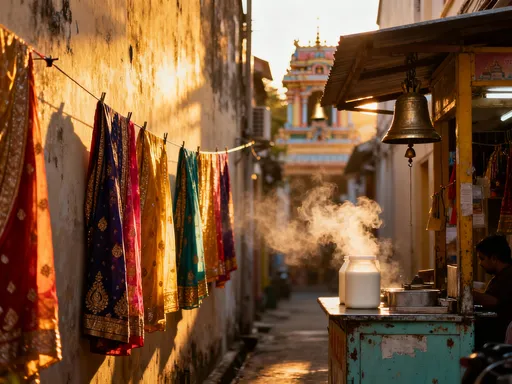
The Al Mureijah Heritage Area is where Sharjah’s architectural heart beats strongest. Here, traditional courtyard houses with coral stone walls and teakwood beams have been meticulously restored to their former glory. Walking through these narrow, winding alleys, one is transported to a time before oil wealth transformed the Gulf. The homes, once occupied by merchants and artisans, were designed for both comfort and community. Their inward-facing layouts centered around shaded courtyards, promoting natural ventilation and family privacy, while intricately carved wooden doors and mashrabiya screens allowed residents to observe the outside world without being seen.
These architectural elements were not merely decorative; they were solutions to environmental and social needs. The mashrabiya, for example, provided privacy in a densely populated neighborhood while allowing airflow and diffused light. The thick coral and limestone walls helped regulate indoor temperatures, keeping homes cool during the long, hot summers. Even the placement of windows and doorways was calculated to capture the slightest breeze, demonstrating a deep understanding of passive cooling long before modern air conditioning existed.
Adjacent to this historic district lies Souk Al Markazi, a sprawling marketplace that seamlessly blends old and new. While the souk incorporates modern infrastructure like climate-controlled walkways and digital payment systems, its design pays homage to traditional marketplaces. Restored 19th-century buildings house spice vendors, gold sellers, and textile merchants, their facades adorned with hand-painted signs and wrought-iron grilles. The layout encourages exploration, with covered passageways leading to open courtyards where families gather over cups of karak tea.
What makes this area truly special is that it is not a preserved relic frozen in time. It is a living, breathing part of the city where architecture serves daily life. Children play near fountains in restored courtyards, artisans demonstrate calligraphy and pottery in open-air studios, and locals conduct business in buildings that have stood for over a century. This continuity between past and present is rare in rapidly modernizing regions, and it gives Sharjah a depth that resonates with visitors seeking authenticity.
Mosques and Minarets: Where Spirituality Meets Design
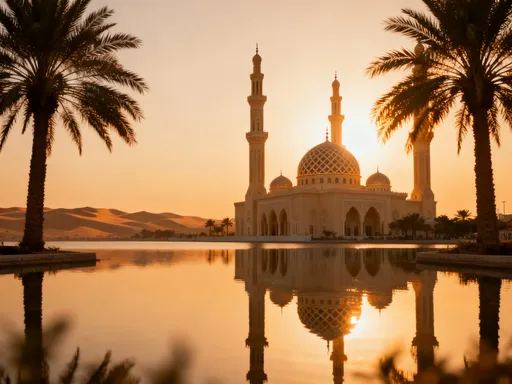
Among Sharjah’s most striking architectural achievements is the Al Noor Mosque, a contemporary interpretation of Islamic design that stands gracefully along the banks of Khor Al Buhais. With its Ottoman-inspired domes, slender minarets, and white marble façade, the mosque creates a serene silhouette against the sky and water. Unlike many mosques in the region, Al Noor welcomes non-Muslim visitors during designated hours, offering a rare opportunity to experience sacred architecture up close without intrusion or restriction.
Inside, the space is a masterclass in spiritual design. Soaring arches guide the eye toward the mihrab, while handcrafted chandeliers cast a soft, golden glow over the prayer hall. The walls are adorned with intricate calligraphy featuring verses from the Quran, each phrase rendered in flowing script that enhances the sense of reverence. The acoustics are carefully engineered – a whisper can carry across the hall, and the imam’s voice resonates with clarity during prayers. Every element, from the orientation of the building to the placement of light sources, is designed to focus the mind and elevate the spirit.
The mosque’s location is also symbolic. Positioned on the edge of a tidal lagoon, it reflects in the water during calm mornings, creating a mirror image that doubles its visual impact. This integration with nature is no accident; it reflects a broader Islamic architectural tradition that values harmony between the built environment and the natural world. The surrounding gardens are planted with native species that require minimal irrigation, reinforcing the mosque’s role as both a spiritual and environmental landmark.
Al Noor Mosque is not the only place of worship that exemplifies this blend of beauty and purpose. Across Sharjah, smaller neighborhood mosques feature traditional wind towers and shaded courtyards, serving as community hubs where residents gather not only for prayer but also for education and social events. These buildings, though less grand, are equally important in shaping the city’s architectural identity – one rooted in humility, service, and connection.
Modern Visions: Cultural Buildings That Redefine Identity
Sharjah’s commitment to culture is perhaps most visible in its network of museums, galleries, and cultural institutions – spaces where tradition and innovation coexist in dynamic tension. The Sharjah Art Foundation, housed in a collection of repurposed bank buildings in the Arts Area, exemplifies this fusion. The original 1970s structures, with their clean lines and modest scale, reflect a regional modernism that once defined Gulf cities. Today, they serve as canvases for contemporary installations, performance art, and experimental exhibitions.
The transformation of these buildings was not about erasing the past, but reinterpreting it. Original architectural features – such as exposed concrete frames, high ceilings, and recessed windows – have been preserved and enhanced. New additions, like steel walkways and glass partitions, contrast with the older materials without overpowering them. This architectural dialogue mirrors the foundation’s mission: to honor heritage while fostering creative risk-taking. Visitors walking through the complex experience a layered narrative, where every corridor tells a story of evolution and adaptation.
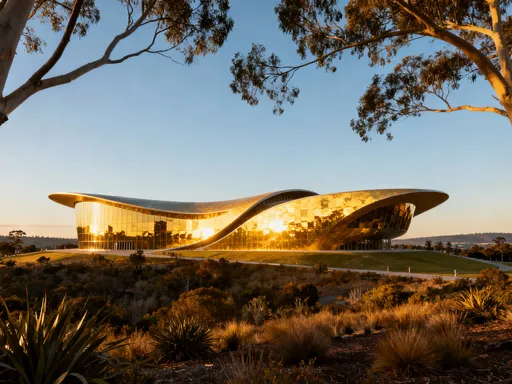
Another standout is the Sharjah Natural History Museum, a bold new structure that redefines what a museum can be in the desert. Its geometric façade, inspired by sand dunes and traditional Islamic tessellations, creates a striking visual identity while serving a functional purpose. The angular overhangs provide shade, reducing solar gain and minimizing the need for artificial cooling. Inside, state-of-the-art galleries showcase the region’s biodiversity, from Arabian leopards to migratory birds, using interactive displays and immersive environments.
What makes this museum significant is not just its content, but its architectural message. It proves that modernity in Sharjah does not mean imitation of Western models. Instead, innovation is rooted in local context – climate, culture, and history. The building does not shout for attention; it invites contemplation. It is a quiet declaration that progress need not come at the cost of identity, and that the future of architecture in the Gulf can be both forward-thinking and deeply rooted.
Sustainable Design: How Climate Shapes the Cityscape
In a region where summer temperatures regularly exceed 40°C (104°F), architecture must be more than beautiful – it must be intelligent. Sharjah has long understood this, incorporating passive design strategies that respond directly to the desert climate. One of the most iconic features is the barjeel, or wind tower, a traditional element that predates mechanical cooling by centuries. These towers capture prevailing winds from above and funnel them down into living spaces, creating natural airflow that cools interiors without electricity.
Modern interpretations of the barjeel can be seen in both residential and public buildings across the city. Some new developments integrate sleek, minimalist versions of the wind tower into high-rise designs, blending heritage with contemporary engineering. Others use computational modeling to optimize airflow in open courtyards and shaded walkways, ensuring that even large complexes remain comfortable without excessive energy use.
Beyond wind towers, Sharjah’s urban planning emphasizes walkability and shade. Wide, covered sidewalks line major streets, allowing pedestrians to move comfortably between destinations. Public parks and plazas are strategically placed to break up heat islands, with native trees providing natural canopies. Reflective building materials and light-colored surfaces reduce heat absorption, while smart glazing on windows minimizes glare and UV exposure.
The city’s commitment to sustainability extends to water management and energy efficiency. Green building standards are increasingly adopted in new developments, with incentives for developers who incorporate solar panels, rainwater harvesting, and energy-efficient HVAC systems. While the Gulf is often associated with excess, Sharjah demonstrates that urban growth can be responsible and resilient. Its architecture is not fighting against the environment – it is working with it, creating a model for sustainable living in one of the world’s most challenging climates.
Hidden Layers: Off-the-Beaten-Path Architectural Gems
Beyond the well-known museums and souks, Sharjah reveals its most intimate architectural treasures in quieter corners of the city. The Iran Cultural House, nestled in a residential neighborhood, is one such gem. Built to honor the historical ties between Sharjah and Persian Gulf communities, the building blends Iranian tilework with Emirati spatial planning. Blue and turquoise mosaics cover the façade, forming intricate floral and geometric patterns, while the interior layout follows the traditional courtyard house model.
Inside, the space hosts cultural events, exhibitions, and tea ceremonies, fostering dialogue between communities. The attention to detail – from the hand-painted ceilings to the carved wooden doors – reflects a deep respect for craftsmanship. Unlike grand monuments, this building does not seek to impress; it seeks to connect. It is a reminder that architecture can be a bridge between cultures, not just a reflection of one.
Another hidden treasure is Bait Al Naboodah, once the home of a wealthy pearling merchant in the late 19th century. Restored with meticulous care, the house now functions as a museum that tells the story of Sharjah’s maritime economy before the oil era. The structure features multiple courtyards, servant quarters, storage rooms, and a majlis (guest reception area), all arranged to reflect social hierarchies and family life of the time. Original artifacts, including diving weights and pearl boxes, are displayed alongside architectural details like ventilated walls and rooftop sleeping areas designed for nighttime cooling.
These lesser-known sites offer a more personal encounter with Sharjah’s architectural legacy. They are not crowded with tourists, allowing visitors to move slowly, observe closely, and imagine the lives once lived within these walls. In an age of fast travel and Instagrammable landmarks, these quiet spaces invite a different kind of engagement – one based on reflection, curiosity, and respect.
Why Sharjah’s Architecture Matters – And Why You Should Visit
In a region often celebrated for its rapid transformation and futuristic ambitions, Sharjah stands apart by building with intention. Its architecture is not about chasing trends or making headlines; it is about continuity, identity, and meaning. Every dome, arch, and courtyard tells a story – of climate and culture, of faith and family, of innovation rooted in tradition. For travelers, especially those who value depth over dazzle, Sharjah offers a rare opportunity to see how a city can grow without losing its soul.
The city’s approach to design serves as a quiet rebuttal to the idea that modernization requires erasure. Instead, Sharjah demonstrates that the past can be a foundation for the future. Heritage buildings are not demolished to make way for new ones; they are restored, adapted, and reimagined. Public spaces are designed not just for efficiency, but for human connection. Even sustainability is approached not as a technical challenge, but as a cultural value.
For families, couples, and solo travelers alike, Sharjah offers an enriching experience that goes beyond sightseeing. It invites you to look closely – at the pattern on a tile, the shadow cast by a wind tower, the way light filters through a wooden screen. It asks you to slow down and notice the details that make a place feel alive. In doing so, it reveals not just the beauty of architecture, but the soul of a community that takes pride in its roots while embracing the world.
If you’re planning your next trip to the UAE, consider stepping off the beaten path. Skip the crowds for a day and let Sharjah surprise you. Walk its quiet streets, sip tea in a centuries-old courtyard, and stand beneath a minaret that touches the sky. You may come for the architecture – but you’ll leave with a deeper understanding of what it means to build a city with heart.