Uncovering Avignon: A Journey Through Hidden Courtyards and Sunlit Streets
Wandering through Avignon, I didn’t expect to fall in love with a city so effortlessly. It’s not just the mighty Palais des Papes or the fragmented Pont d’Avignon—there’s something deeper, quieter, in the stone alleys and lavender-scented squares. This is a place where history breathes through sun-washed walls, and every corner holds a surprise. If you're seeking beauty with soul, Avignon delivers in ways you won’t see coming. More than a destination, it’s an invitation to slow down, observe closely, and let the rhythm of southern France unfold at its own gentle pace. Here, travel becomes not just sightseeing, but feeling.
The First Glimpse: Arriving in a City Frozen in Time
Avignon emerges from the Provençal landscape like a scene lifted from a Renaissance painting—soft light, warm stone, and the distant silhouette of a fortress rising above the Rhône. As the train slows into Gare d'Avignon-Centre, the first sight is unmistakable: the Palais des Papes, its ochre walls glowing under the southern sun, standing as a silent guardian of centuries past. There’s no grand fanfare, no towering modern skyline to obscure the view. Instead, the city reveals itself gradually, inviting arrival not as a transition, but as part of the experience.
The air carries subtle signatures of place—the faint aroma of rosemary from nearby hills, the murmur of rapid French spoken with a lilting Provençal cadence, and the clink of coffee cups on shaded café terraces. These sensory impressions form the city’s true welcome. Unlike bustling Paris or glamorous Nice, Avignon doesn’t dazzle immediately. It asks for patience, rewarding those who pause to notice the details: the way shadows stretch across cobblestones in late afternoon, or how a stray breeze carries the scent of orange blossoms from a hidden garden.
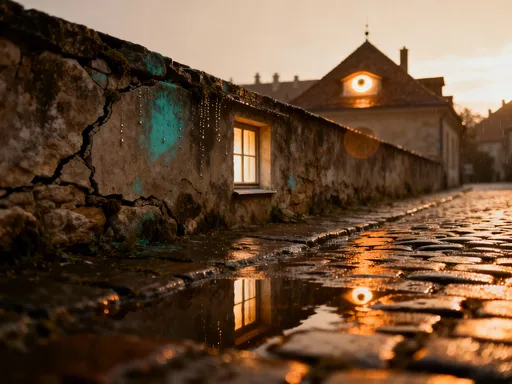
Walking from the station into the heart of the old town, the transition is seamless. The medieval ramparts, still intact, frame the city like arms holding time at bay. Beyond their gates lies a network of narrow streets, where laundry hangs between balconies and shuttered windows hint at lives unfolding behind centuries-old facades. This is not a museum piece frozen in amber, but a living city where history and daily life coexist in quiet harmony. The first glimpse of Avignon, therefore, is not just visual—it’s emotional, a subtle shift in rhythm that signals the beginning of a different kind of journey.
For travelers, especially those accustomed to fast-paced itineraries, this initial encounter serves as a gentle reset. The city resists being consumed quickly. It encourages wandering without a map, listening more than speaking, and allowing oneself to be drawn into the unhurried pulse of Provence. Whether arriving by train, car, or foot, the act of entering Avignon feels less like checking into a destination and more like stepping into a slower, richer dimension of time.
Palais des Papes: More Than Just a Monument
Rising with quiet authority at the city’s heart, the Palais des Papes is more than an architectural marvel—it is the soul of Avignon’s historical identity. Constructed in the 14th century when the papacy temporarily relocated from Rome, this fortress-palace became the center of Western Christianity for nearly 70 years. At its peak, it housed popes, cardinals, and thousands of clerics, functioning as both spiritual capital and political stronghold. Today, it stands as the largest Gothic palace in Europe, a testament to ambition, faith, and the complex interplay of religion and power.
Yet beyond its imposing size and historical significance, the true power of the Palais lies in its ability to transport visitors across time. Walking through its vast chambers—the Great Chapel, the Consistory, the Pope’s private apartments—one can almost hear the rustle of silk robes and the hushed debates of theological councils. Modern audio guides and curated exhibitions enhance this immersion, using light, sound, and archival fragments to reconstruct daily life within these walls. In the Grand Tinel, where papal banquets once unfolded, visitors stand beneath soaring vaults and imagine the clink of goblets and the murmur of Latin prayers.
What makes the Palais especially compelling is its duality: it is both awe-inspiring and intimate. While its scale conveys power, the smaller rooms reveal human details—the modest bed where a pope slept, the narrow staircases used by servants, the frescoes worn by time yet still vibrant with color. These nuances transform the site from a distant relic into a lived-in space, reminding us that history was once ordinary life.
For a more personal experience, timing is essential. Early morning visits, just after opening, offer quiet corridors and soft light filtering through stained glass. Late afternoon brings golden illumination to the ramparts, where panoramic views stretch across the Rhône and into the surrounding countryside. Fewer tourists mean longer moments of reflection, allowing space to absorb not just the facts, but the atmosphere. The rooftop walk, often overlooked, provides one of the most breathtaking perspectives in the city—a sweeping vista that ties together river, bridge, and skyline in a single gaze.
Additionally, seasonal exhibitions deepen understanding, often focusing on medieval art, religious symbolism, or the cultural exchanges that flourished during the Avignon Papacy. These rotating displays ensure that even repeat visitors discover something new. For families, interactive installations engage younger guests, turning history into an exploratory adventure rather than a lecture. Ultimately, the Palais des Papes is not merely a stop on an itinerary—it is a journey in itself, one that rewards curiosity and presence.
Beyond the Bridge: Rediscovering the Pont Saint-Bénézet
The song is familiar, even to those who’ve never visited—"Sur le pont d’Avignon, on y danse tous en rond." But the real Pont Saint-Bénézet bears little resemblance to the cheerful melody. Once a vital crossing over the Rhône, the bridge was repeatedly destroyed by floods, leaving only four arches standing today. Rather than diminishing its significance, this fragmentation enhances its poetry. The ruins stand as a meditation on impermanence, resilience, and the passage of time—a place where history feels not recited, but felt.
Walking across the remaining span, visitors move slowly, drawn by the river’s presence below. The Rhône here is wide and powerful, its currents swirling with quiet intensity. In the golden light of late afternoon, the water shimmers like molten bronze, reflecting the sky and the ancient stones in shifting patterns. Couples pause midway to take photos, children lean over the railing with wonder, and elderly locals stroll with the ease of routine. The atmosphere is not that of a tourist attraction, but of a communal space—reverent, peaceful, alive.
Historically, the bridge was more than infrastructure; it was a symbol of faith. According to legend, it was built in the 12th century by a young shepherd named Bénézet, guided by divine vision. Though engineers later reinforced it, its repeated destruction by the river seemed to confirm its sacred, almost mythical status. Each reconstruction became an act of devotion, a refusal to surrender to nature’s force. Today, a small chapel dedicated to Saint Nicholas, patron of sailors, stands at the bridge’s base—a quiet reminder of the spiritual dimension woven into daily life.
From the end of the surviving arches, the view unfolds in both directions: upstream, the river bends gracefully through vineyard-lined banks; downstream, the modern town stretches beyond the old walls. It is here that the contrast between past and present becomes most vivid. The ancient stones, weathered and moss-covered, speak of centuries of change, while the steady flow of the Rhône suggests continuity. This duality—of loss and endurance—is what gives the site its emotional weight.
For those seeking a deeper connection, visiting at different times of day reveals new layers. At sunrise, mist rises from the water, softening the edges of the city. At dusk, the bridge is silhouetted against a painted sky, and the lights of Avignon begin to flicker on. On summer evenings, open-air concerts occasionally take place nearby, blending music with the natural acoustics of stone and water. These moments transform the site into a living cultural space, where history is not preserved behind glass, but experienced in real time.
Secret Squares and Hidden Courtyards
While the Palais and the bridge draw the crowds, Avignon’s true essence hides in its quieter corners—in unmarked doorways, shaded alcoves, and courtyards known mostly to locals. These hidden spaces, often overlooked by guidebooks, offer some of the most authentic experiences in the city. They are not grand plazas or manicured gardens, but intimate pockets of daily life, where time slows and the rhythms of Provençal living unfold naturally.
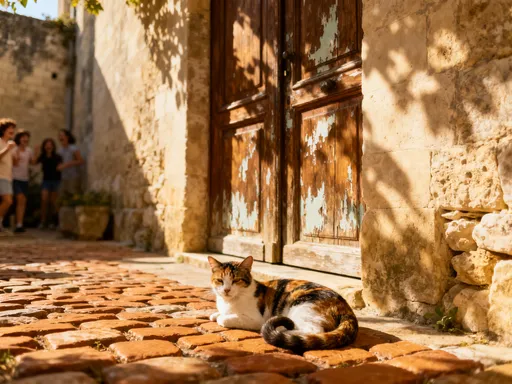
One such gem is the Place du Collège, tucked behind the Lycée d’Avignon, a former Jesuit school. Here, a small square opens beneath plane trees whose leaves filter the sunlight into dappled patterns on the ground. Elderly men gather in the afternoons to play pétanque, their laughter punctuating the clack of steel balls on gravel. Children chase each other between benches, and cats stretch lazily on sun-warmed stone ledges. There is no café, no souvenir stand—just life, unperformed and unhurried.
Another quiet sanctuary is the Cour d’Honneur, part of the Palais complex but often bypassed by tourists rushing to the main halls. Surrounded by arched galleries and crowned with a Renaissance fountain, this courtyard exudes serenity. In spring, wisteria spills over the stone balustrades in cascades of purple; in summer, the shade offers relief from the heat. During the annual Avignon Festival, it transforms into an open-air theater, where classical performances echo against centuries-old walls. But on ordinary days, it remains a place of stillness, ideal for sitting, reading, or simply watching the light shift across the pavement.
Discovering these spaces requires a shift in mindset—away from ticking off landmarks and toward wandering with intention. The best way to find them is to leave the GPS behind and follow instinct: turn down a narrow alley that smells of fresh bread, pause at a wrought-iron gate slightly ajar, or follow the sound of splashing water from a hidden fountain. These moments of serendipity are not accidents, but the result of slowing down and paying attention.
Other lesser-known spots include the Jardin des Doms’ quieter corners, where benches face west for optimal sunset views, and the rue de la Grande-Fourche, a charming street lined with artisans’ workshops and flower-filled balconies. Even within the bustling market district, small courtyards open unexpectedly behind bakeries or bookshops, offering brief respites from the activity. Each of these places, though modest in scale, contributes to Avignon’s unique character—a city that reveals itself gradually, like a story unfolding one page at a time.
The Colors and Scents of Provence: Markets and Gardens
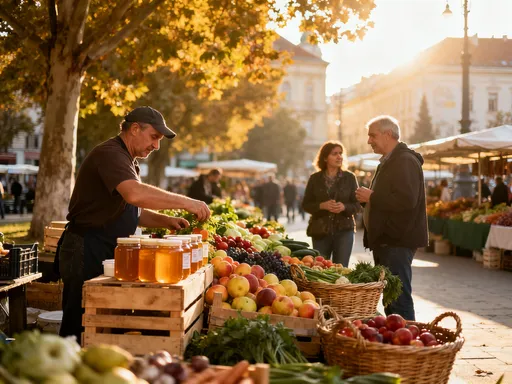
No visit to Avignon is complete without a morning spent at Les Halles, the city’s central market housed in an elegant 19th-century iron and glass pavilion. From the moment you step inside, the senses come alive. Stalls overflow with pyramids of sun-ripened tomatoes, baskets of glossy olives, wheels of goat cheese dusted with ash, and bouquets of lavender tied with twine. The air is rich with the scent of herbs—thyme, rosemary, basil—mingling with the sweetness of ripe peaches and the sharp tang of saucisson.
This is not a market designed for tourists; it is where locals shop, bargaining lightly, exchanging news, and sampling before buying. Vendors greet regulars by name, offering slices of melon or a taste of tapenade on crusty bread. The experience is as much social as it is culinary, a weekly ritual that binds community and seasonality. For visitors, it offers a direct connection to Provençal life, where food is not just sustenance, but celebration.
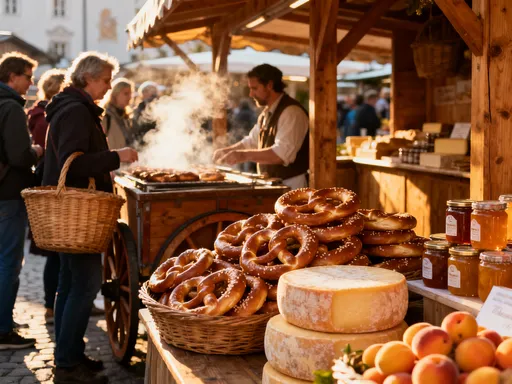
Among the highlights are the regional specialties: tapenade made from Niçoise olives, socca (a chickpea pancake) cooked in wood-fired ovens, and calissons—almond-shaped candies from Aix-en-Provence. Artisanal honey, lavender products, and locally pressed olive oil make thoughtful souvenirs, each carrying the essence of the region. The best time to visit is early in the morning, between 8:00 and 10:30 a.m., when the selection is freshest and the crowds are manageable. By midday, many stalls begin to close, their owners retreating to shaded terraces for a leisurely lunch.
Just steps from the market, the Rocher des Doms gardens provide a green counterpoint to the urban energy. Perched on a limestone promontory above the Rhône, this terraced park offers one of the most stunning viewpoints in Avignon. From its manicured lawns and fragrant rose beds, visitors can see across the river to Villeneuve-lès-Avignon, with the distant peaks of the Alpilles and Mont Ventoux on clear days. Benches are strategically placed for contemplation, and the sound of fountains creates a soothing backdrop.
The gardens are especially enchanting in spring and early summer, when wisteria and jasmine bloom, and the scent of orange blossoms drifts from potted trees. Families picnic under the plane trees, couples stroll along gravel paths, and photographers capture the golden light of late afternoon. Unlike more formal French gardens, the Rocher des Doms feels relaxed and welcoming, a place where beauty is enjoyed rather than displayed. Together, the market and the gardens represent the heart of Provençal living—vibrant, sensory, and deeply rooted in place.
Day Trips That Deepen the Experience
Avignon’s central location in the Vaucluse department makes it an ideal base for exploring the wider region of Provence. Within an hour’s drive, a rich tapestry of landscapes and villages unfolds, each adding depth to the understanding of this corner of France. These excursions are not distractions, but extensions of the Avignon experience, revealing how the city fits into a broader cultural and geographical context.
One of the most rewarding destinations is Châteauneuf-du-Pape, a village perched on a hilltop just 15 kilometers north. Famous for its robust red wines, the area is blanketed with vineyards marked by rounded stones known as galets, which retain heat and nurture the Grenache vines. Visitors can tour family-run wineries, taste wines in candlelit cellars, and learn about the appellation’s strict production standards. Many estates welcome guests without reservations, offering a personal touch often missing in larger wine regions. The village itself, with its ruined papal castle and narrow lanes, feels like a living artifact of medieval Provence.
Further east, the perched village of Gordes clings dramatically to a limestone cliff, its honey-colored buildings rising like a fortress from the valley floor. One of the most photographed villages in France, Gordes offers panoramic views, artisan boutiques, and a serene abbey at Senanque, surrounded by lavender fields in summer. The drive there winds through the Luberon countryside, passing orchards, olive groves, and clusters of cypress trees. Strolling through Gordes’ steep streets, one senses the harmony between architecture and nature—a hallmark of Provençal design.
For those who time their visit with the blooming season, the lavender fields near Sault—about 90 minutes northeast—are a must. Between late June and early August, rolling hills are transformed into a sea of purple, humming with bees and perfumed with fragrance. Photographers, painters, and wanderers alike are drawn to this natural spectacle, which feels both vast and intimate. Local distilleries offer tours, explaining how lavender is harvested and turned into essential oils, soaps, and sachets.
Other notable excursions include the Roman aqueduct of Pont du Gard, a UNESCO World Heritage site just 25 kilometers west, where ancient engineering meets natural beauty, and the colorful market town of L’Isle-sur-la-Sorgue, known for its antique shops and network of canals. Each of these destinations enriches the Avignon journey, providing contrast and context. They remind travelers that while the city is a gem in itself, it is also a gateway to the soul of Provence.
Why Avignon Stays With You
Long after the souvenirs are unpacked and the photos uploaded, Avignon lingers—not because of its monuments, but because of its moments. It is the memory of sitting on a bench by the Rhône as the sun dipped below the horizon, painting the sky in streaks of rose and gold. It is the echo of footsteps in a narrow alley, the warmth of a freshly baked fougasse from a street vendor, the laughter of children playing pétanque in a hidden square. These are the fragments that stay, quietly reshaping the way one thinks about travel.
Avignon does not announce its beauty with fanfare. It does not demand attention through spectacle. Instead, it reveals itself in whispers—in the way light falls on an ancient wall, in the scent of thyme carried on a breeze, in the unhurried pace of a city that values presence over productivity. It teaches the traveler to look closely, to listen, to be still. In doing so, it offers not just a visit, but a transformation.
For women in their thirties to fifties—many of whom balance family, work, and personal aspirations—Avignon represents a rare kind of freedom. It is a place where time expands, where one can walk without agenda, sip wine without guilt, and rediscover the joy of simple pleasures. It speaks to the part of us that craves authenticity, beauty, and connection—not just to a place, but to ourselves.
Ultimately, Avignon stays with you because it feels like a return to something essential. It reminds us that the best journeys are not measured in miles, but in moments of quiet wonder. It invites us to travel not as spectators, but as participants in the rhythm of life. And when we leave, we carry not just memories, but a renewed sense of possibility—a whisper that follows us home, gently urging us to live more fully, more deeply, more like Provence.