You Won’t Believe These Hidden Photo Spots in Swakopmund
Swakopmund isn’t just a coastal stop in Namibia—it’s a visual playground. I was blown away by how much character this small town packs into its streets, sidewalks, and open spaces. From colorful German-era buildings to unexpected desert-meets-ocean backdrops, every public corner feels like a curated photo set. If you're chasing authentic, off-the-beaten-path shots, this place delivers. The blend of architectural heritage, stark natural contrasts, and thoughtful urban design creates a uniquely photogenic environment. Unlike other African coastal towns where development often overshadows charm, Swakopmund preserves its identity with grace. Here, even the most ordinary scenes—a bench against a weathered wall, a bicycle leaning on a sunlit path—carry visual weight. This is a destination where photography isn’t limited to postcard landmarks but thrives in the subtle details of daily life.
First Impressions: A Town That Feels Like a Set
Arriving in Swakopmund, one is immediately struck by the town’s cinematic quality. Nestled between the relentless Namib Desert and the cold Atlantic Ocean, it defies expectations of what an African coastal town should look like. The first glimpse reveals wide, tree-lined avenues, pastel-colored buildings with ornate gables, and an orderly streetscape that feels more European than African—yet undeniably African in spirit. This architectural legacy stems from its German colonial past, visible in structures like the Woermannhaus and the Art Nouveau-style Swakopmund Hotel. What sets the town apart is not just its preserved buildings, but how seamlessly they integrate into everyday life. Public spaces are not relics behind glass but living, breathing parts of the urban fabric.
The visual harmony begins at the edge of town, where the desert’s golden dunes seem to pause just short of swallowing the sidewalks. This proximity of arid landscape and coastal urbanism creates a surreal backdrop unmatched in southern Africa. Unlike beach towns that prioritize commercial tourism with modern developments, Swakopmund maintains a low-rise profile, allowing its historic charm to remain unobstructed. Even the traffic islands and street signs are thoughtfully placed, contributing to a sense of balance. The town’s cleanliness and lack of visual clutter—no tangled power lines, minimal billboards—make it a dream for photographers seeking uncluttered compositions.
What truly elevates Swakopmund’s public spaces is their human scale. Sidewalks are wide enough for strolling yet intimate enough to encourage connection. Palm trees line the main promenade, their fronds rustling in the ocean breeze, casting moving shadows on whitewashed walls. These subtle details—light, texture, proportion—make the town feel like a stage set designed for storytelling. For the photographer, every turn offers a new vignette: a child chasing a ball near a flowerbed, an elderly couple sharing coffee at an outdoor café, or a street vendor arranging handmade crafts under a striped awning. The authenticity of these moments is preserved because the town hasn’t been overdeveloped for mass tourism.
The Promenade: Where Desert Meets Design
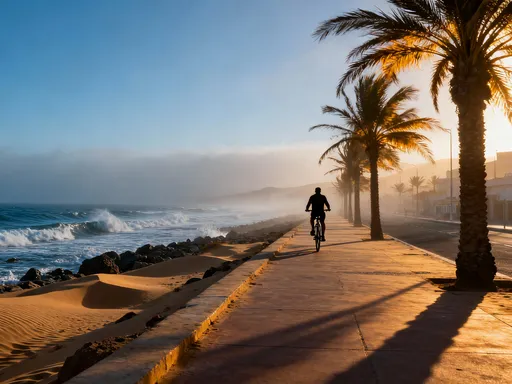
The Swakopmund Promenade is more than a seaside walkway—it’s a dynamic canvas where nature and urban design intersect. Stretching along the Atlantic coast, this paved path offers uninterrupted views of the ocean to the west and the town’s distinctive architecture to the east. What makes it exceptional for photography is the dramatic contrast between elements: the cold, churning waves against the warm hues of the desert; the structured geometry of lampposts and benches set against the wild unpredictability of sea and sky. During golden hour, when the sun dips below the horizon, the entire promenade glows in soft amber light, turning even the simplest scenes into something poetic.
One of the most compelling features of the promenade is its ability to transform with the weather. Unlike tropical beaches with predictable sunshine, Swakopmund is known for its coastal fog, locally called the *malmokkie*, which rolls in from the ocean, especially in the mornings and evenings. This mist doesn’t obscure the scenery—it enhances it. It wraps around streetlights, softens outlines, and adds a layer of mystery to every frame. Photographers can capture silhouettes of cyclists riding through the haze or long exposures of waves dissolving into ghostly streaks. The fog also diffuses light, eliminating harsh shadows and creating an even, flattering glow ideal for portraits and atmospheric shots.
Small design elements contribute significantly to the promenade’s photographic appeal. Cast-iron benches with intricate scrollwork, vintage-style street lamps, and wooden railings weathered by salt air all add texture and narrative depth. These aren’t merely functional—they’re part of the town’s aesthetic language. A single bench framed against the ocean, with footprints in the sand leading toward it, can evoke solitude or anticipation. The presence of cyclists, joggers, and kite flyers introduces movement and scale, turning static landscapes into living scenes. For best results, photographers should visit during early morning or late afternoon when human activity is steady but not overwhelming, and the light is at its most expressive.
Allee Park and the Heart of Public Life
At the center of Swakopmund lies Allee Park, a green oasis that serves as both a recreational haven and a social heartbeat. Surrounded by historic buildings and shaded by mature trees, this well-maintained park offers a striking contrast to the surrounding desert. Its symmetrical pathways, central fountain, and flowerbeds bursting with seasonal color create a sense of order and tranquility. Unlike manicured European gardens that feel formal and distant, Allee Park invites interaction. Locals gather here on weekends, families picnic on the grass, and children play near the fountain—natural moments that unfold without performance, perfect for candid photography.
The park’s layout is inherently photogenic. The canopy of trees filters sunlight, creating dappled patterns on the ground, while the fountain—especially when backlit in the late afternoon—produces delicate sprays of mist that catch the light. The surrounding buildings, including the Swakopmund Museum and the Lutheran Church, frame the park like a picture postcard. Their neutral tones and classic architecture provide a timeless backdrop, ensuring that photos taken here won’t feel dated. Morning light, in particular, bathes the park in a soft, golden glow, highlighting textures in the bark, stone, and water without the harsh contrast of midday sun.
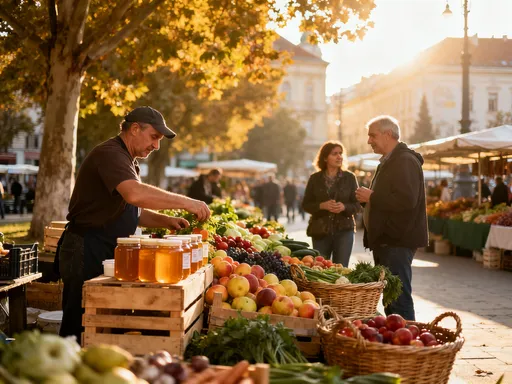
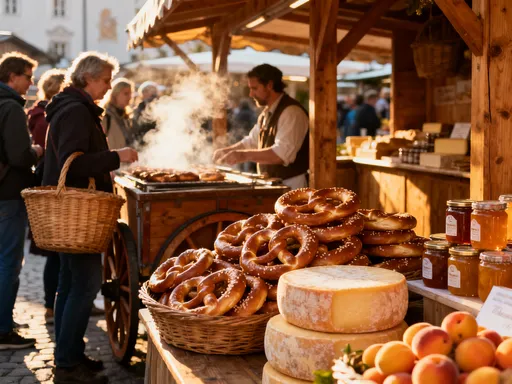
Weekend craft markets add another layer of visual interest. Stalls display handmade jewelry, woven baskets, and traditional Namibian art, offering vibrant colors and cultural authenticity. Photographers can capture the interplay between vendor and customer, the concentration on an artisan’s face, or the way sunlight reflects off a polished bead. These moments are not staged; they reflect real economic and social exchange. Because Allee Park is a shared space for both residents and visitors, it fosters organic interactions. A grandmother watching her grandchildren play, a group of friends laughing over coffee, or a street musician tuning a guitar—each scene tells a quiet story of community life.
For those seeking composition with meaning, Allee Park offers balance. The symmetry of its design allows for structured shots, while the spontaneous human activity introduces warmth and unpredictability. Using a shallow depth of field can isolate a single moment—a child reaching for a butterfly—while a wide-angle lens captures the park’s full vibrancy. The key is patience: waiting for the right gesture, the perfect alignment of light and shadow, or the fleeting expression that conveys joy or contemplation. In a world where many public spaces feel sterile or overly commercialized, Allee Park stands out as a place where beauty and belonging coexist.
Street Art and Urban Textures
Beyond its historic façades, Swakopmund is revealing a new layer of identity through street art. Scattered across alleyways, side streets, and the walls of older buildings, murals are quietly transforming the urban landscape. These artworks reflect a fusion of Namibian heritage and contemporary expression—depicting traditional patterns, wildlife, and cultural symbols alongside modern design elements. Unlike graffiti in some cities that feels rebellious or chaotic, Swakopmund’s street art is generally sanctioned, thoughtful, and integrated into the community’s visual rhythm. It adds color, narrative, and a sense of progression to neighborhoods that might otherwise be overlooked.
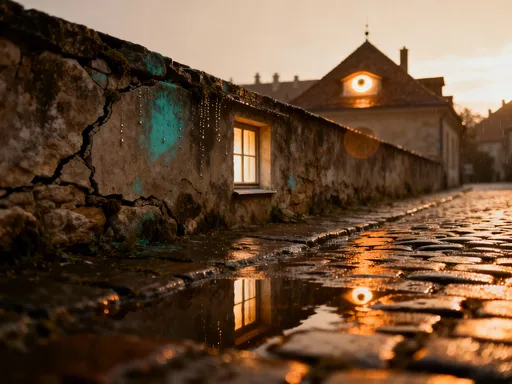
One of the most rewarding photographic pursuits in Swakopmund is exploring its urban textures. The town’s buildings, shaped by decades of wind, sun, and salt air, bear the marks of time in compelling ways. Peeling paint reveals layers of past colors, like pages in a visual diary. Wooden shutters, sandblasted by desert winds, show intricate grain patterns. Metal doors bear rust stains that resemble abstract paintings. These details, often ignored in daily life, become powerful subjects through the lens. A close-up of a weathered wall, with light raking across its surface, can evoke emotion and history far beyond its physical presence.
Photographers should consider walking routes through the older residential areas, particularly near Kaiser-Wilhelm-Straße and Felsenweg, where colonial-era homes stand side by side with newer additions. These neighborhoods offer a rich variety of architectural styles and surface textures. Alleyways between buildings, often narrow and shadowed, create natural frames for vertical compositions. A single shaft of sunlight cutting across a cobblestone path or illuminating a mural of a desert oryx can turn an ordinary passage into a dramatic scene. The interplay of light and shadow here is especially effective during mid-morning and late afternoon when the sun is low enough to create depth.
To capture the full essence of these spaces, photographers should slow down and observe. Look beyond the obvious mural to the way it interacts with its surroundings—the crack in the pavement beneath it, the plant growing from a crevice in the wall, the shadow cast by a passing bird. These secondary elements add context and authenticity. Using a macro lens can reveal the fine details of texture, while a wide-angle lens can place the artwork within its urban setting. The goal is not just to document the art, but to tell the story of the place that hosts it—how history, culture, and environment converge on a single wall.
The Jetty and Waterfront Drama
Extending into the Atlantic like a weathered sentinel, the Swakopmund Mole—commonly referred to as the jetty—is one of the most atmospheric spots in town. Built during the German colonial era as a docking point for supply ships, it now stands as a haunting relic of the past, battered by waves and time. The structure, made of rusted iron and concrete, stretches over 400 meters into the sea, offering an unparalleled vantage point for photography. Its industrial decay, combined with the raw power of the ocean, creates a mood that is both melancholic and majestic. For photographers, the jetty is a masterclass in contrast: metal against water, stillness against motion, human ambition against nature’s indifference.
The best time to visit is during low tide or just before sunset, when the light turns the rusted beams into glowing orange streaks and the waves crash with theatrical force. Long-exposure techniques work exceptionally well here—using a tripod to capture the silky flow of water around the pilings, or the mist rising from the impact of waves. The jetty’s linear structure naturally leads the eye into the frame, making it ideal for compositional depth. Silhouettes of seabirds perched on the rails or a lone fisherman at the end of the pier add scale and narrative. Even on foggy days, when the far end of the jetty disappears into the mist, the atmosphere remains compelling, evoking a sense of mystery and isolation.
The surrounding waterfront area enhances the photographic potential. Fishing boats, painted in faded blues and reds, rest on the sand or float near the shore, their nets draped like lace. Seabirds—cormorants, gulls, and oystercatchers—add movement and life, their wings catching the light in mid-flight. The smell of salt and fish, the cry of gulls, and the rhythm of the waves all contribute to a multisensory experience that translates into more immersive images. Photographers should be mindful of tides and weather conditions, as the jetty can become slippery and dangerous during high surf. But when conditions are right, it offers some of the most powerful imagery in Swakopmund—a place where time, tide, and texture converge.
Practical Tips for Capturing the Best Shots
To make the most of Swakopmund’s photogenic spaces, timing and preparation are essential. Early morning is often the most rewarding period—light is soft, the fog is at its most dramatic, and the streets are quiet. By 7:00 a.m., the promenade and Allee Park begin to come alive, but without the midday crowds. Midday light in Swakopmund can be challenging due to haze and flat contrast, so it’s best used for indoor shots or exploring shaded alleys and courtyards. Late afternoon, from 4:00 p.m. onward, brings golden hour, when the sun casts long shadows and warm tones across the town. This is ideal for architectural photography, street scenes, and silhouette work, especially at the jetty.
Equipment choices should match the conditions. A tripod is invaluable for low-light situations, particularly during foggy mornings or long exposures at the waterfront. A polarizing filter can help reduce glare on wet surfaces and enhance sky contrast. For street photography and candid moments, a 35mm or 50mm prime lens offers versatility and sharpness without drawing too much attention. Those interested in textures and details will benefit from a macro lens, while a wide-angle is essential for capturing the grandeur of the promenade or the jetty’s expanse. While smartphones can produce excellent results, especially in good light, a mirrorless or DSLR camera provides greater control over depth of field and low-light performance.
Equally important is respecting public space etiquette. Swakopmund is a small town where residents go about their daily lives, not a tourist stage. When photographing people, it’s courteous to smile, make eye contact, and ask permission when possible. Avoid blocking pathways or disrupting markets for the sake of a shot. Blending in—dressing modestly, moving quietly, and being patient—often yields more authentic images than intrusive behavior. Most of the best spots are free and accessible year-round, so there’s no need to rush or take risks. The town rewards those who observe with care and shoot with respect.
Why Swakopmund’s Public Spaces Tell a Deeper Story
Beyond their visual appeal, Swakopmund’s public spaces tell a story of resilience, adaptation, and cultural fusion. This is a town built in one era, reshaped by another, and now embraced by a new generation that values both heritage and authenticity. The German architecture isn’t preserved as a monument to the past, but as a living part of daily life. The street art doesn’t erase history—it dialogues with it. The coexistence of desert and ocean, of order and wildness, mirrors the broader Namibian spirit: enduring, balanced, and quietly proud.
For the thoughtful traveler, Swakopmund offers more than pretty pictures—it invites a deeper way of seeing. It encourages us to look beyond landmarks and seek meaning in benches, walls, and market stalls. It reminds us that beauty often resides in the ordinary, and that public spaces are not just places to pass through, but to connect with. Every photograph taken here captures not just a moment, but a layer of identity—of a town, a culture, and a landscape that has learned to thrive in contrast.
So as you plan your journey, consider this: the most memorable images may not come from the most famous sites, but from the quiet corners where light, texture, and life intersect. Let Swakopmund teach you to see differently. Slow down. Walk without a map. Notice the details. And when you raise your camera, remember—you’re not just capturing a place. You’re preserving a story that’s still being written.