You Won’t Believe What I Found in Palau’s Wild Nature
Have you ever seen water so clear it feels like flying? I didn’t think it was possible—until I reached Koror, Palau. This tiny island nation blew my mind with its untouched beauty, from glowing lagoons to jungle-covered islands rising out of the sea. I went for the views but stayed for the feeling—like stepping into a world nature kept secret. This is real, raw paradise. Every ripple, every shadow beneath the surface, seemed to whisper stories of balance, resilience, and quiet wonder. In a world where so much feels overexposed, Palau remains a sanctuary of authenticity, where nature isn’t just preserved—it’s honored.
Arrival in Koror: First Impressions That Stick
Stepping off the plane in Koror, the capital of Palau, is like crossing a threshold into another rhythm of life. The air wraps around you—warm, moist, and scented with frangipani and sea salt. There’s no rush, no blaring horns, just the soft hum of a single main road winding past modest homes, small markets, and palm trees leaning lazily toward the shore. The island is small, just a few square miles, yet it carries a quiet confidence. It doesn’t try to impress; it simply exists, rooted in its place between sky and ocean.
From the airport, the drive to the waterfront takes less than ten minutes, but the shift in atmosphere is profound. One moment you’re in transit, the next you’re gazing at water so vividly turquoise it looks digitally enhanced. The Rock Islands, Palau’s most iconic feature, rise in the distance like ancient sentinels wrapped in emerald green. It’s impossible not to feel a sense of arrival—not just to a destination, but to a state of mind. Koror doesn’t overwhelm; it prepares you. It’s the calm before the awe.
What makes Koror such an effective gateway is its balance of accessibility and remoteness. Basic amenities are available—guesthouses, local eateries serving fresh fish and taro, and tour operators who know the waters like their own backyards—but there’s no urban sprawl, no neon signs or crowded streets. The island functions as a gentle introduction to the natural wonders that lie just beyond its shores. It’s a place to settle in, breathe deeply, and let the pace of island life recalibrate your expectations. For travelers seeking immersion rather than spectacle, Koror sets the tone perfectly.
Rock Islands: Where Limestone Towers Rise from Emerald Seas
The Rock Islands are Palau’s crown jewel, a cluster of more than 250 jungle-draped limestone formations scattered across the turquoise expanse of the Western Pacific. Recognized as a UNESCO World Heritage Site in 2012, this archipelago is the result of millions of years of geological transformation. Once part of a larger landmass, these islands were shaped by rising and falling sea levels, erosion, and coral growth, leaving behind a dreamscape of mushroom-shaped islets, hidden lagoons, and labyrinthine channels.
Kayaking through the Rock Islands is one of the most intimate ways to experience their magic. Paddling in silence, you glide between towering cliffs cloaked in dense vegetation, their roots gripping the rock like nature’s own scaffolding. The water beneath is so clear you can see every ripple of sand and the occasional shadow of a reef shark passing below. In some areas, the channels narrow to just a few feet, creating a sense of quiet enclosure, as if you’re moving through a living cathedral sculpted by wind and water.
Beneath the surface, the marine life is astonishingly rich. Shallow reefs pulse with color—staghorn coral, brain coral, and soft fans waving in the current. Rare blue coral, a species found only in a few locations worldwide, glows faintly in the sunlight. Parrotfish, angelfish, and clownfish dart among the crevices, while green sea turtles glide past with unhurried grace. The ecosystem here is delicate, self-sustaining, and largely undisturbed. Snorkeling in these waters isn’t just recreation; it’s a privilege, a rare glimpse into what healthy oceans can look like.
One of the most striking features of the Rock Islands is their “halo” effect—shallow, sandy flats surrounding each islet, ringed by deeper water. These zones create natural fish nurseries and feeding grounds, supporting biodiversity that scientists continue to study. The islands themselves are uninhabited, protected from development to preserve their ecological and cultural significance. For visitors, this means an experience unspoiled by crowds or commercialization. You don’t just see the Rock Islands—you feel them, in the stillness, the light, and the deep sense of timelessness.
Jellyfish Lake: A Swim Like No Other
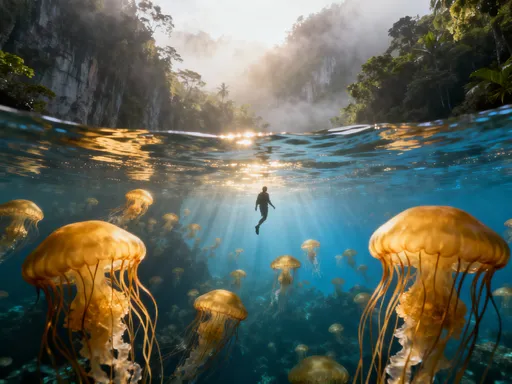
Among Palau’s most extraordinary natural wonders is Jellyfish Lake, a landlocked marine lake on Eil Malk Island. This isolated body of water, cut off from the ocean thousands of years ago, is home to millions of golden jellyfish that pulse through the surface in a slow, mesmerizing dance. Unlike their ocean-dwelling relatives, these jellyfish have evolved to be stingless, making it safe—and unforgettable—to swim among them.
Entering the lake is an otherworldly experience. As you wade in, the jellyfish surround you, their translucent bells glowing amber in the sunlight. They move in unison, drifting toward the sun in the morning and following its path across the sky, a behavior driven by the symbiotic algae living in their tissues. These algae produce energy through photosynthesis, fueling the jellyfish’s movement. It’s a perfect example of nature’s quiet cooperation—no predators, no competition, just a delicate balance sustained over millennia.
The sensation of floating in the lake, with jellyfish brushing gently against your skin, is both surreal and calming. There’s no fear, no tension—just a sense of being welcomed into a rare, fragile world. The water is warm, slightly viscous, and remarkably still. You can hear your own breath, the soft splash of movement, and the distant call of birds on the shore. It’s a moment of pure presence, one that stays with you long after you’ve left.
But this miracle is not guaranteed to last. Jellyfish Lake has faced challenges, including periods of population decline due to climate fluctuations and reduced rainfall. In recent years, the numbers have rebounded, but access is carefully managed. Visitors are required to follow strict guidelines: no sunscreen, no diving below the anoxic layer, and no touching the jellyfish unnecessarily. These rules aren’t just suggestions—they’re essential to preserving one of the most unique ecosystems on Earth. Swimming here isn’t about spectacle; it’s about reverence.
Ngardmau Waterfall: Jungle Trek to a Hidden Power
Deep in Palau’s interior, far from the coastline’s soft breezes, lies Ngardmau Waterfall—the highest waterfall in the country, cascading over 80 feet through layers of volcanic rock. Reaching it requires a moderate hike through dense jungle, a journey that begins on a paved path and quickly turns to mud, roots, and stone steps carved into the hillside. The air is thick with humidity, alive with the calls of kingfishers, honeyeaters, and the occasional rustle of a gecko in the underbrush.
The trail follows a narrow river, its banks lined with ferns, moss-covered boulders, and wild ginger plants. As you climb, the sound of rushing water grows louder, a constant reminder of what awaits. Then, suddenly, the trees part, and there it is—a powerful curtain of water plunging into a wide, cool pool below. Mist rises like breath from the earth, cooling your skin after the exertion of the climb. The force of the fall creates a low, resonant hum that you feel in your chest.
Swimming in the pool at the base of Ngardmau Waterfall is like stepping into nature’s own spa. The water is refreshingly cold, swirling with energy from the cascade above. Some visitors brave the slippery rocks to stand directly in the fall’s path, letting the weight of the water massage their shoulders. Others float quietly, gazing up at the green canopy and the slice of sky framed by the cliffs. It’s a place of renewal, both physical and emotional.
The site holds cultural significance for Palauans, who view waterfalls as sacred spaces—places of reflection, cleansing, and connection to ancestral lands. Locals often visit for quiet contemplation or family gatherings, treating the area with deep respect. As a visitor, you’re reminded to do the same: to leave no trace, to speak softly, and to honor the stillness. The journey to Ngardmau isn’t just about the destination; it’s about the act of seeking something greater than convenience—a reminder that the most rewarding experiences often require effort and humility.
Blue Holes and Secret Caves: Diving Into the Unknown
Beneath Palau’s surface lies another world—one of submerged caves, cathedral-like chambers, and mysterious blue holes that plunge into darkness. These geological formations, carved by centuries of water movement and coral erosion, offer some of the most thrilling underwater experiences in the Pacific. Unlike open-sea diving, exploring these hidden spaces feels like entering a secret dimension, where light filters through cracks in dramatic shafts and currents guide you through narrow passageways.
One of the most famous sites is Blue Corner, where a submerged cave system meets strong ocean currents, attracting reef sharks, eagle rays, and schools of barracuda. But for those seeking quieter exploration, the Uet era Ngermeuangel cave system offers a more intimate adventure. Snorkelers and divers glide through tunnels where sunlight dances on the walls, illuminating ancient coral fossils and hidden alcoves. The silence is profound, broken only by the echo of your own movements.
These blue holes are not just beautiful—they’re scientifically significant. Some contain layers of freshwater and saltwater that don’t mix, creating unique microbial ecosystems. Others hold clues to Palau’s geological past, with fossilized remains embedded in the limestone. For experienced divers, the thrill comes from navigating these spaces with care, respecting the power of the currents and the fragility of the formations. For snorkelers, even a glimpse into these underwater cathedrals is enough to inspire awe.
Safety is paramount. Guides emphasize the importance of staying close, avoiding contact with the walls, and never venturing too deep without proper training. But for those who follow the rules, the reward is unparalleled—a sense of discovery, of moving through a world few ever see. These caves aren’t just attractions; they’re reminders of how much of our planet remains unexplored, how much beauty exists beyond the surface.
Local Conservation Efforts: How Nature Stays Wild
Palau’s pristine environment is not accidental—it’s the result of deliberate, long-term conservation. In 2009, the nation introduced the Palau Pledge, a groundbreaking initiative requiring all visitors to sign an eco-pledge stamped into their passports upon arrival. The pledge asks travelers to act in ways that preserve Palau’s culture and environment for future generations. It’s a powerful symbol of national values, one that has inspired similar programs around the world.
Even more impactful is the Palau National Marine Sanctuary, established in 2015. This vast protected zone covers 80% of Palau’s exclusive economic zone—an area larger than France—where commercial fishing is completely prohibited. The remaining 20% allows sustainable fishing for local communities. The sanctuary has already shown measurable benefits: fish biomass has increased, coral resilience has improved, and endangered species like the dugong and hawksbill turtle are being sighted more frequently.
At the community level, conservation is woven into daily life. On many islands, families participate in reef monitoring, removing invasive species like the crown-of-thorns starfish and replanting coral fragments damaged by storms. Schools teach children about marine stewardship from an early age, ensuring that environmental responsibility is passed down. Waste reduction programs have led to bans on single-use plastics, and many resorts use solar power and rainwater harvesting to minimize their footprint.
Visitors play a crucial role in this ecosystem of care. By choosing eco-certified tours, using reef-safe sunscreen, and respecting protected areas, travelers contribute directly to preservation. The message is clear: Palau is not a theme park. It’s a living, breathing home—one that welcomes guests, but only if they come with respect. This model of sustainable tourism isn’t just effective; it’s essential. In an era of climate change and biodiversity loss, Palau offers a blueprint for how small nations can lead with courage and vision.
Why This Journey Changes How You See Nature
Leaving Palau, you carry more than photos or souvenirs. You carry a shift in perspective—a deeper understanding of what it means to witness nature in its most authentic form. This isn’t just a vacation; it’s a recalibration of values. In a world where convenience often trumps care, Palau reminds us that beauty requires protection, that wonder is not infinite, and that every choice we make ripples outward.
Experiencing places like Jellyfish Lake or Ngardmau Waterfall doesn’t just inspire awe—it creates responsibility. When you’ve floated among stingless jellyfish that exist nowhere else, when you’ve stood beneath a waterfall that has flowed for millennia, you begin to see yourself not as a visitor, but as a participant in a much larger story. You realize that conservation isn’t abstract; it’s personal. It’s the decision to avoid plastic, to support sustainable practices, to speak up for places that can’t speak for themselves.
Palau’s greatest gift is this transformation. It doesn’t shout its message; it whispers it—in the clarity of the water, the silence of the jungle, the gentle pulse of a jellyfish. It teaches that true luxury isn’t in excess, but in preservation. That the most meaningful journeys aren’t about how far you go, but how deeply you see.
So as you return to your daily life, let that whisper stay with you. Let it guide your choices, your travels, your conversations. Let it remind you that paradise isn’t just a place—it’s a promise. A promise to protect, to honor, and to pass on. Because when we travel with awareness, we don’t just discover the world. We help keep it alive.