You Won’t Believe What I Ate in Ghent’s Hidden Corners
Ghent, Belgium isn’t just canals and medieval towers—its real magic hides in quiet alleys where locals slurp steaming bowls of waterzooi and bite into buttery, flaky pastries fresh from neighborhood ovens. I skipped the tourist traps and followed smoke, laughter, and the scent of frying dough—straight into the city’s culinary soul. What I found? Authentic, unfiltered, and absolutely unforgettable. This is not a city that performs for cameras; it lives, breathes, and feeds itself with quiet pride. Every cobblestone lane holds a secret: a family-run bakery opening at dawn, a butcher slicing smoked sausage by hand, a grandmother selling homemade pickles from a folding table. To taste Ghent is to listen—to follow the rhythms of daily life rather than the beat of a guided tour.
Why Ghent Deserves More Than a Day Trip
Ghent often appears on itineraries as a charming stop between Brussels and Bruges, squeezed into a half-day visit before travelers rush onward. But reducing Ghent to a checklist of skyline views and canal selfies is to miss its essence. Unlike its more polished neighbors, Ghent pulses with vitality, a city where history is not preserved behind glass but woven into everyday routines. Its compact center, easily navigable on foot or by bicycle, invites slow exploration—exactly the pace needed to uncover its culinary heartbeat. The Graslei and Korenlei, with their row of stunning medieval guildhouses, are undeniably beautiful, but they represent only one layer of Ghent’s identity. Behind these postcard facades, in side streets and residential courtyards, life unfolds at a human scale. Families gather in corner bakeries, shopkeepers greet regulars by name, and the aroma of slow-cooked stews drifts from open kitchen windows.
What makes Ghent particularly rewarding for food-focused travelers is its balance between preservation and authenticity. While many historic European cities have seen their local character diluted by tourism, Ghent has retained a strong sense of community. Residents are proud of their heritage, and that pride extends to their food traditions. This is a city where grandmothers still make speculaas spice blends from memory, where butchers cure meats using recipes passed down for generations, and where seasonal ingredients dictate daily menus. The city’s manageable size means that even first-time visitors can move beyond the main squares and discover neighborhoods where life is lived, not staged. Spending more than a day allows travelers to witness market deliveries at sunrise, enjoy a late afternoon coffee in a tucked-away café, and return to a favorite spot as the evening lights reflect on the Leie River. It’s in these unhurried moments that the true texture of Ghent reveals itself—one bite at a time.
Beyond Waffles and Beer: The Real Taste of Ghent
When most people think of Belgian cuisine, waffles dripping with whipped cream and a cold Trappist beer come quickly to mind. While these indulgences have their place, they only scratch the surface of what Ghent—and Flanders more broadly—has to offer. The city’s culinary identity runs deeper than tourist favorites, rooted in centuries of agricultural tradition, seasonal cycles, and home-cooked comfort. To eat in Ghent is to embrace dishes that are hearty, humble, and deeply satisfying. These are meals born not from spectacle but from necessity, refined over time into something close to art.
One such dish is stoverij, a slow-cooked beef stew simmered in dark beer with onions and spices until the meat falls apart at the touch of a fork. Served with a side of buttery mashed potatoes or a thick slice of rye bread, stoverij is the epitome of Flemish comfort food. It’s the kind of meal that warms you from the inside out, especially on a damp autumn evening. Then there’s gentse neus, a spiced pork sausage named for its distinctive shape—long and slightly curved, resembling a nose. This regional specialty is seasoned with cloves, cinnamon, and nutmeg, then smoked slowly over beechwood, giving it a rich, aromatic depth. It’s often served cold as part of a charcuterie platter or warmed and sliced thin over a fresh baguette.
Equally emblematic is tijmtert, a savory thyme tart made with a flaky pastry crust and a custard-like filling infused with fresh thyme, onions, and sometimes bacon. Baked in neighborhood ovens and sold at local markets, this dish highlights the Flemish appreciation for simple, high-quality ingredients. Unlike flashy fusion cuisine or Instagrammable desserts, these foods don’t shout for attention. They speak quietly, through texture and aroma, of generations who valued sustenance, seasonality, and the joy of sharing a meal. To seek them out is to honor the real heartbeat of Ghent’s food culture—one that values tradition not as a performance, but as a way of life.
Hunting Hidden Eateries: How to Find the Unlisted Gems
Some of the best meals in Ghent aren’t listed on Google Maps, don’t have Instagram accounts, and might not even have a proper sign above the door. These are the unmarked doors, the steamy windows, the narrow storefronts where the line forms by 12:15 p.m. and disappears by 1:30. Finding them requires more than an app—it demands observation, patience, and a willingness to wander without a destination. The key is to follow the cues that only locals notice: the delivery bike parked outside a bakery at 6 a.m., the cluster of workers in work boots queuing for sandwiches, the faint smell of roasting meat drifting from a basement kitchen.
One of the most reliable indicators is foot traffic during off-peak hours. While tourist restaurants fill up at noon and empty by 2 p.m., neighborhood spots often see their busiest times between 11:30 and 12:30, when office workers, students, and tradespeople stop for lunch. If you see a small deli with a line spilling onto the sidewalk midweek, it’s worth joining—even if the menu is in Dutch and the cashier doesn’t speak English. Another strategy is to explore just beyond the main squares. A five-minute walk from Graslei, down a quiet residential street, you might stumble upon a family-run winkel—a corner shop—where the owner sells homemade meatballs, pickled vegetables, and freshly baked bread from her own kitchen. These are not commercial ventures but extensions of home life, where food is shared as naturally as conversation.
Timing also plays a crucial role. Many of Ghent’s most authentic eateries operate on limited hours, opening only for lunch or closing early in the afternoon. Some are only open on certain days of the week. This isn’t inconvenience—it’s authenticity. These places exist to serve the community, not to accommodate tourists. Visiting them means adjusting your rhythm to match the city’s, arriving early, eating slowly, and accepting that some doors may be closed. But that’s part of the adventure. Each discovery feels earned, not handed over by an algorithm. And when you finally sit down to a steaming plate of waterzooi in a tucked-away canteen, served by someone who’s been cooking it for 30 years, you realize that the journey was as nourishing as the meal.
Markets That Feed the City: From Produce to Pickles
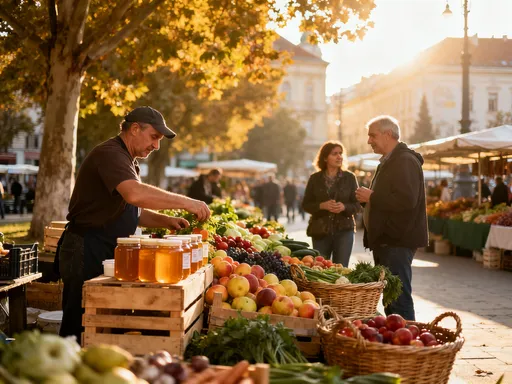
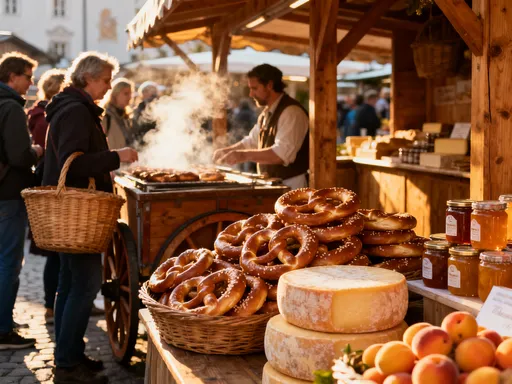
Ghent’s markets are not tourist attractions—they are vital organs of daily life. They are where residents stock their pantries, where farmers sell the morning’s harvest, and where generations-old recipes are kept alive through fresh, local ingredients. Two of the most vibrant are the Klingelbeeksmarkt and the Sint-Pietersmarkt, each offering a different slice of the city’s culinary soul. The Klingelbeeksmarkt, held every Thursday and Sunday in the northern part of the city, draws a mix of locals and food enthusiasts looking for organic produce, artisanal cheeses, and handmade preserves. Stalls overflow with seasonal vegetables—purple kohlrabi, golden beets, heirloom tomatoes—arranged with care by farmers who speak proudly of their soil and growing methods.
Equally compelling is the Sint-Pietersmarkt, a bustling Saturday affair near the train station. Here, the energy is electric. Butchers display rows of cured sausages and pâtés, bakers sell crusty loaves dusted with flour, and fishmongers arrange glistening herring and mussels on beds of ice. One vendor specializes in homemade condiments—spicy mustard, apple chutney, fermented cabbage—each jar labeled with a hand-written note about its ingredients. Another sells warm appelbeignets, doughnuts stuffed with cinnamon-spiced apple and fried to golden perfection. The scent is irresistible, pulling passersby like a magnet. Children clutch paper cones of sugar-dusted pastries while parents negotiate prices for fresh cheese or a wheel of aged Gouda.
What makes these markets special is not just the food, but the human connections they foster. Transactions are not rushed; they are conversations. A customer might linger to ask how a pickle is made, or a vendor might offer a sample with a smile. These interactions are the quiet threads that hold the community together. For visitors, the market is an invitation to slow down, to touch, smell, and taste with intention. It’s a place to learn—not from a guidebook, but from the people who live and eat here. And if you’re lucky, you might leave not just with a bag of groceries, but with a recipe, a story, or the name of a hidden bakery that only locals know.
Breakfast Like a Local: No Tourist Menu Needed
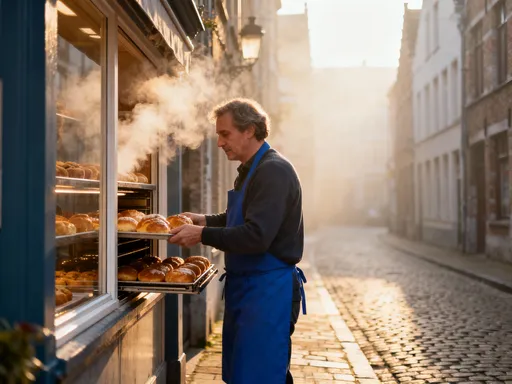
In many cities, breakfast is an afterthought—a croissant grabbed on the way to a museum or a generic hotel buffet. In Ghent, it’s a ritual. Residents take their morning meal seriously, treating it as a moment of calm before the day unfolds. And unlike in tourist-heavy areas, where breakfast is often a commodified experience served with a view, Ghent’s morning culture is grounded in simplicity and quality. There are no elaborate avocado toasts or matcha lattes on every corner. Instead, you’ll find bakeries opening at dawn, their ovens already glowing, filling the streets with the scent of freshly baked bread.
The best breakfasts in Ghent are found in unassuming places: a family-run café with checkered tablecloths, a corner bakery with a chalkboard menu, a quiet square where an elderly couple sips coffee from thick white mugs. One favorite is the flensje, a thin Belgian crêpe made from a yeasted batter and cooked until golden. Unlike French crêpes, flensjes have a slightly airy texture and are often filled with butter, sugar, and lemon—or, for a heartier option, scrambled eggs and cheese. Served on a paper plate with a plastic fork, it’s the kind of meal that feels both indulgent and humble.
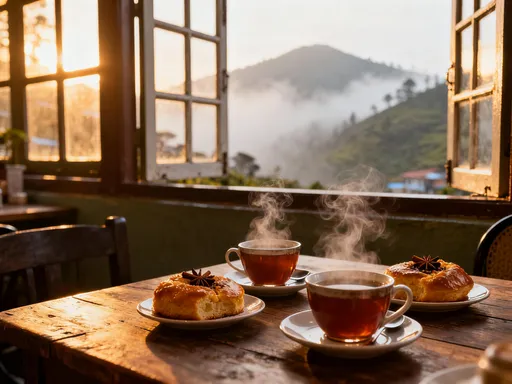
Another staple is speculaas-spiced bread, a dense, aromatic loaf flavored with cinnamon, nutmeg, cloves, and ginger. Baked fresh each morning, it’s perfect with a slice of creamy cheese or a smear of homemade jam. Paired with a strong, dark coffee—never watered down or served in a souvenir cup—it makes for a breakfast that grounds you in the moment. These meals don’t come with explanations or English menus. They don’t need to. The quality speaks for itself. And in that simplicity lies a deeper truth: that the most meaningful travel experiences often come not from grand sights, but from the quiet act of sharing a meal as the city wakes up around you.
The Secret Life of Ghent’s Neighborhoods
To know Ghent fully, you must move beyond the postcard-perfect center and explore its lesser-known districts. Dampoort, once an industrial area, now pulses with creativity and diversity. Nieuw Gent, a revitalized neighborhood along the canal, blends modern architecture with community gardens and pop-up food markets. These areas are where tradition meets adaptation, where Flemish recipes sit comfortably beside North African spices and Middle Eastern grills. It’s in these neighborhoods that Ghent’s food culture reveals its full complexity—not as a static heritage, but as a living, evolving conversation.
In Dampoort, for example, you’ll find a Moroccan butcher shop selling lamb seasoned with cumin and saffron, just steps from a centuries-old bakery that still bakes waterzooi pies for Sunday dinner. A Vietnamese family runs a tiny noodle stand that opens only on weekends, serving bowls of pho that draw long lines of loyal customers. In Nieuw Gent, a community kitchen hosts weekly dinners where refugees and locals cook together, blending flavors from Syria, Eritrea, and Flanders into shared meals. These are not fusion experiments for trendy restaurants—they are real, everyday expressions of community.
What ties these places together is not a single cuisine, but a spirit of resilience and connection. Food becomes a bridge—between generations, cultures, and histories. A grandmother might teach her granddaughter how to make tijmtert, while a young chef experiments with adding harissa to a classic beef stew. These moments don’t happen on main streets or in guidebooks. They unfold in backyards, in market stalls, in shared kitchens where language barriers dissolve over a pot of soup. To witness them is to understand that Ghent’s culinary soul is not frozen in time, but constantly being remade—richer, deeper, and more inclusive with every meal.
How to Eat Responsibly and Respectfully Off the Beaten Path
As more travelers seek authentic experiences, there’s a growing risk of turning hidden gems into overcrowded attractions. A once-quiet bakery can become overwhelmed by visitors after a single viral post. A family-run winkel might struggle to keep up with demand, losing the personal touch that made it special. To truly honor Ghent’s food culture, visitors must practice mindful exploration—curiosity without consumption, appreciation without exploitation. This means supporting small vendors in ways that sustain rather than strain them.
One way to do this is by shopping like a local: buying a few items at a time, returning regularly, and building relationships with vendors. Instead of taking photos of every dish, take time to ask questions—how something is made, what’s in season, what the vendor recommends. Even if you don’t speak Dutch, a smile and a simple “Dank u” go a long way. Avoid monopolizing tables in small eateries; if a place is busy, share space or come back later. And never treat a neighborhood as a stage—residents are not performers, and their homes are not exhibits.
Equally important is embracing the slow pace of local dining. In Ghent, meals are not rushed. People linger over coffee, share stories, and savor each bite. When you sit down to eat, do the same. Put away your phone, listen to the sounds around you, and let the experience unfold naturally. This kind of presence is the highest form of respect. It says, “I am not just passing through. I am here to learn, to connect, to be part of this moment.” Responsible travel isn’t about checklist tourism—it’s about humility, curiosity, and gratitude. And when you approach Ghent’s hidden corners with that mindset, you don’t just taste the food. You become part of its story.
Ghent’s true flavor isn’t found in glossy guidebooks—it’s in shared tables, steaming takeout windows, and recipes passed down through generations. By stepping quietly into its neighborhoods, you don’t just taste the food—you become part of the story. So next time you visit, skip the obvious. Let your nose lead you. The city’s soul is simmering, just out of sight.